

For a traditional, raised logo and an authentic look, choose custom stitched jerseys; for lightweight performance, complex graphics, and easy care, choose sublimated jerseys. The better option depends on how your team plays, what it wants its uniform to feel like, and how much design detail it needs. Here’s how the two compare on construction, durability, comfort, cost, and everyday use.
How Do the Jerseys Differ in Design and Build?
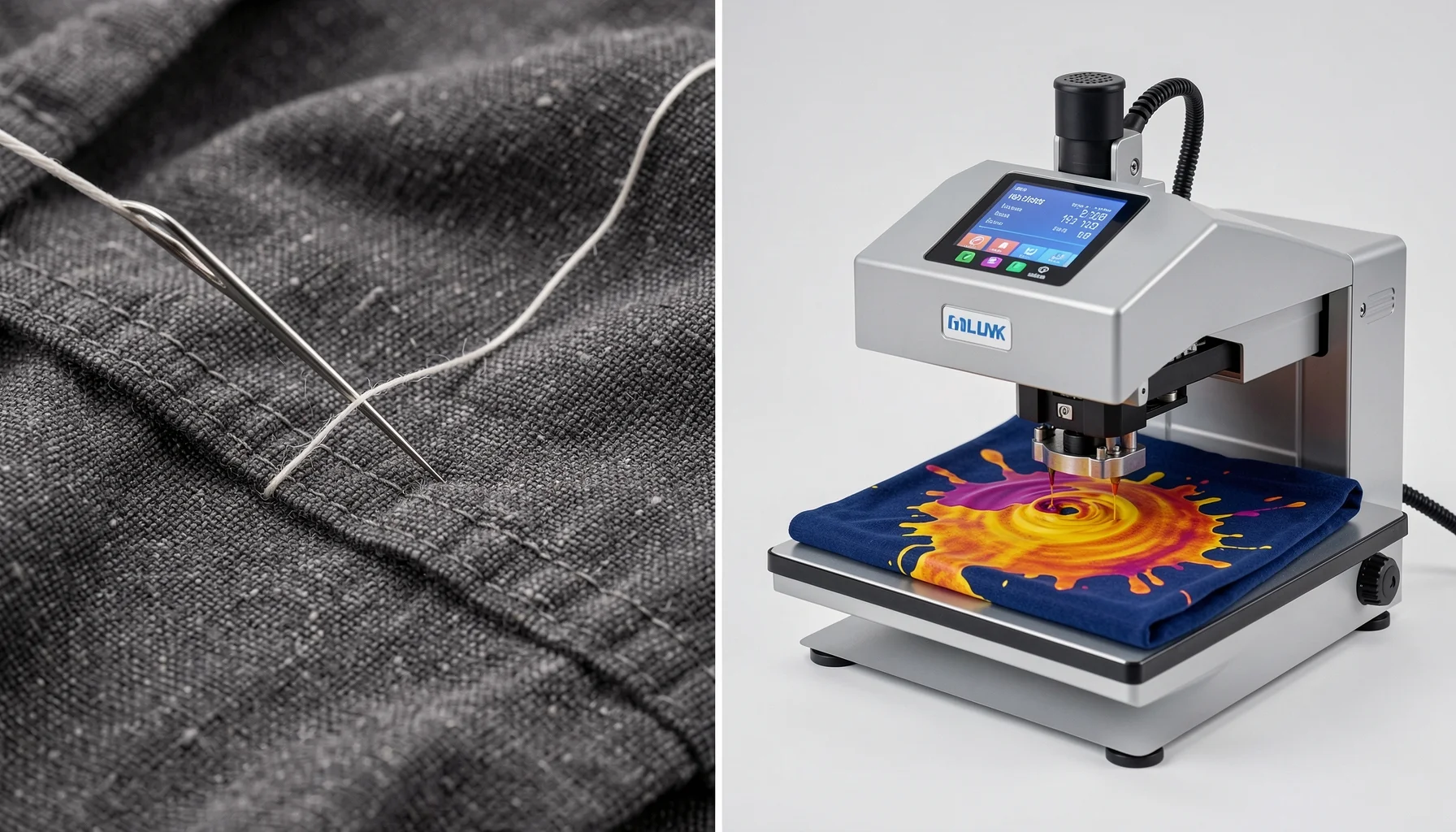
Stitched jerseys add fabric and thread to the garment; sublimated jerseys dye the design into polyester fibers. That construction difference affects how each uniform looks and feels, how it is made, and which designs suit it best.
 Custom Stitched Jerseys vs Sublimated Jerseys: Best Fit? - How Do the Jerseys Differ in Design and Build?
How each jersey is made
A custom stitched jersey typically uses pieces of tackle twill fabric for names, numbers, and logos. Those pieces are cut, positioned on the jersey, and secured with industrial stitching, often using embroidery or zigzag stitching. The result has visible edges and a raised, tactile surface.
A sublimated jersey is generally produced through a cut-and-sew process. The design is printed in reverse onto transfer paper, aligned with white polyester fabric panels, and heat-pressed so the ink becomes gas and penetrates the fibers. The printed panels are then sewn into the finished jersey.
That distinction matters: stitched decoration sits on and attaches to the garment, while sublimated artwork becomes part of the fabric itself. Sublimation is suited to synthetic materials with high polyester content; it does not bond properly to natural fibers such as cotton.
Design flexibility and appearance
Stitching is a strong choice for bold lettering, numbers, and logos where a dimensional, traditional finish is the goal. However, every added layer, color, or detailed shape can involve more material and labor. Intricate gradients and large, multi-color artwork are less straightforward to reproduce as layered twill.
Sublimation makes it easier to apply multiple colors, gradients, patterns, and sponsor graphics across the garment without adding a separate printed layer. It works best on white or light-colored fabric because sublimation ink is transparent; it generally cannot create visible designs on dark fabric.
Head-to-head comparison matrix
| Comparison criterion in English | custom stitched jerseys vs sublimated jerseys | Sublimated Jerseys | Verdict in English |
|---|---|---|---|
| Decoration method | Cut fabric shapes are sewn onto the jersey | Ink is heat-transferred into polyester fibers | Choose based on whether you want a raised or smooth finish |
| Surface feel | Raised, textured, and tactile | Smooth; the design is part of the fabric | Stitched feels more dimensional; sublimated feels uninterrupted |
| Typical fabric | Often heavier pro-weight polyester mesh or double-knit | Usually lightweight polyester, including interlock or bird’s-eye mesh | Sublimated is generally the lighter option |
| Design range | Well suited to bold names, numbers, and traditional logos | Handles complex patterns, gradients, and many colors | Sublimated offers greater graphic freedom |
| Color limitations | Fabric pieces offer a distinct color contrast | Most effective on white or light-colored polyester | Stitched may suit some dark-base designs better |
| Design durability | Resistant to fading, but thread or edges can fray or snag | Ink is embedded and resists peeling, cracking, and fading | Sublimation avoids decoration peeling; fabric can still wear |
| Wear and care | Stitching may need gentler washing to protect the decoration | No raised print layer to peel; generally easy to maintain | Follow the garment’s care instructions in either case |
| Weight and breathability | Twill and thread add weight | Lightweight, porous performance fabric is common | Sublimated is usually preferable for high-intensity play |
| Cost drivers | Labor, twill, and additional colors or layers | Artwork complexity does not add a per-color printing layer; production setup still matters | Request a quote for the actual design and quantity |
| Best-fit use | Traditional aesthetic, fan wear, or low-contact use | Competitive teams and detailed performance designs | Match the finish to the team’s priorities |
| Order and timing considerations | Names and numbers require individual handling | Cut-and-sew production involves panel preparation and assembly | Lead time depends on the supplier, order, and approval process |
Which Jersey Performs Better for Durability and Comfort?
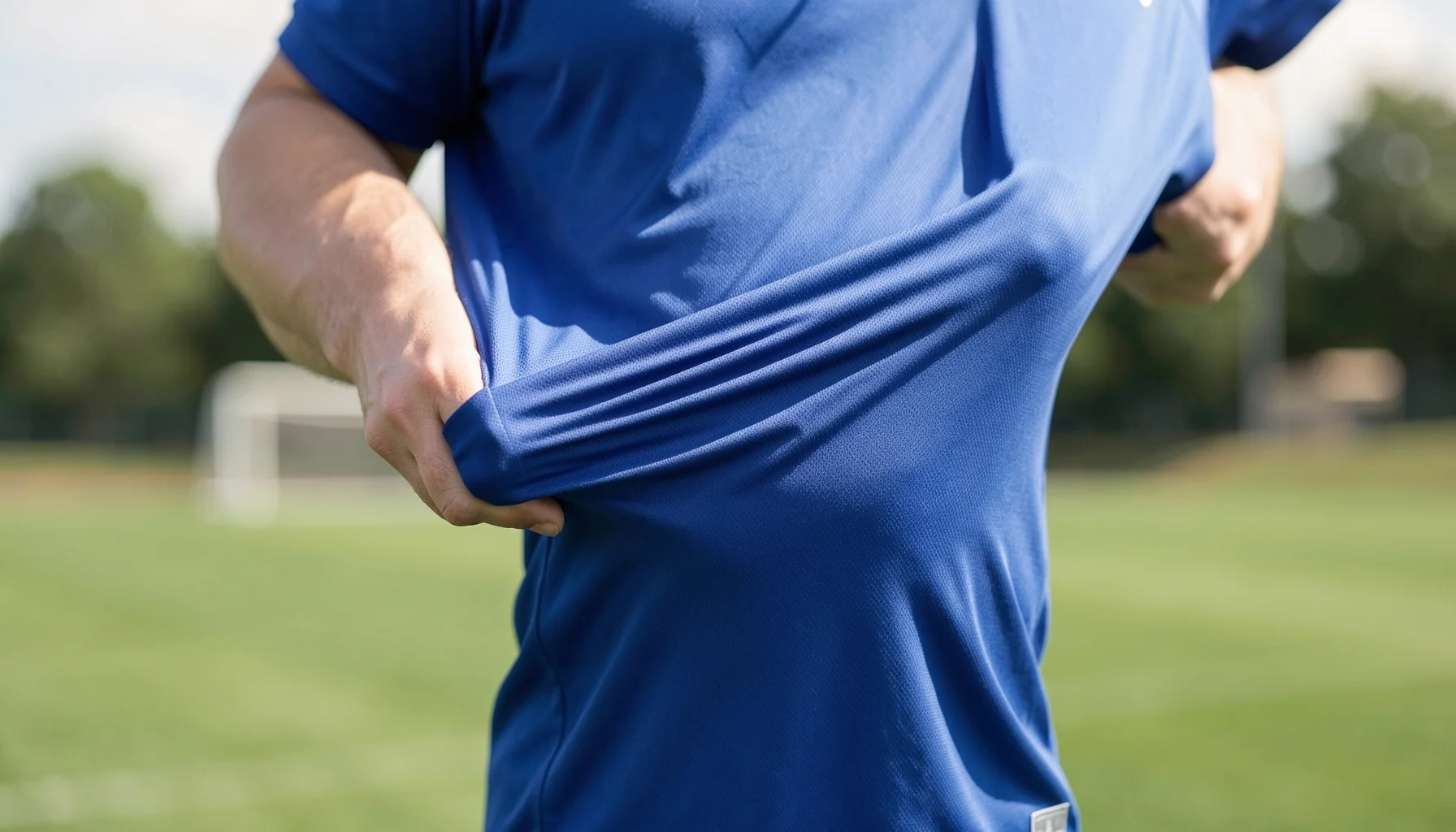
Sublimated designs are less prone to peeling, cracking, or fading, while stitched designs provide a textured finish that can withstand use but may fray or snag. For comfort during intense play, lightweight sublimated polyester generally has the advantage.
 Custom Stitched Jerseys vs Sublimated Jerseys: Best Fit? - Which Jersey Performs Better for Durability and Comfort?
What durability means in practice
The phrase “more durable” can refer to the graphic, the stitching, or the garment as a whole. Sublimation has a clear advantage for design integrity: because the ink is embedded in the polyester fibers, there is no separate printed layer to peel or crack. With normal care, the decoration is designed to last as long as the fabric.
Stitched decoration has a different strength. Twill and thread create a substantial, traditional finish, and stitched designs resist fading. But stitching is not immune to wear: edges or threads can fray, snag, or unravel, especially with heavy use or improper washing. A snagged edge may need attention even when the rest of the jersey remains in good condition.
Neither construction makes a jersey indestructible. The garment fabric, quality of construction, intensity of use, and care all matter. For contact-heavy play or frequent laundering, assess the finished garment and its care guidance rather than assuming one decoration method guarantees a longer-lasting uniform.
Feel, weight, and breathability
Stitched jerseys have more physical depth. That raised feel is a selling point for fans and players who want a classic uniform appearance, but twill and thread add weight. Depending on the garment, the decoration may also feel more noticeable against the body.
Sublimated jerseys have a smooth surface because the design does not sit on top of the fabric. They are typically made from lightweight moisture-wicking polyester, often interlock or bird’s-eye mesh. Since the ink becomes part of the fiber, the design does not create a heavy, less-breathable layer over the fabric.
For soccer, basketball, and other high-intensity activities, that combination can make sublimation a practical choice. For casual wear, collecting, or a traditional look, the extra texture of stitching may be more appealing than the reduced weight.
Independent pros and cons
Custom stitched jerseys: pros
- Raised, tactile lettering and logos create a traditional, dimensional look.
- Twill and thread give names, numbers, and bold designs a distinct finish.
- Stitched decoration is resistant to fading.
- A strong fit for fan wear, collecting, and teams that prioritize a classic aesthetic.
Custom stitched jerseys: cons
- Added material and thread make the garment heavier than a comparable lightweight sublimated option.
- Thread or fabric edges can fray, snag, or unravel with wear.
- Complex designs and extra colors or layers may add production work and cost.
- More delicate washing may be advisable to protect the stitching.
Sublimated jerseys: pros
- The design is embedded in polyester, so it will not peel or crack like a surface layer.
- Smooth, lightweight construction suits athletic use.
- Gradients, intricate patterns, and multiple colors are practical design options.
- No raised decoration layer interrupts the fabric surface.
Sublimated jerseys: cons
- Sublimation requires high-polyester synthetic fabric; it is not suitable for cotton.
- It is most effective on white or light-colored fabric, not dark bases.
- Cut-and-sew panel printing involves alignment and production steps; poor handling during pressing can cause ghosting.
- The smooth finish cannot reproduce the raised, stitched look of tackle twill.
Which Option Suits Your Team’s Design and Use?
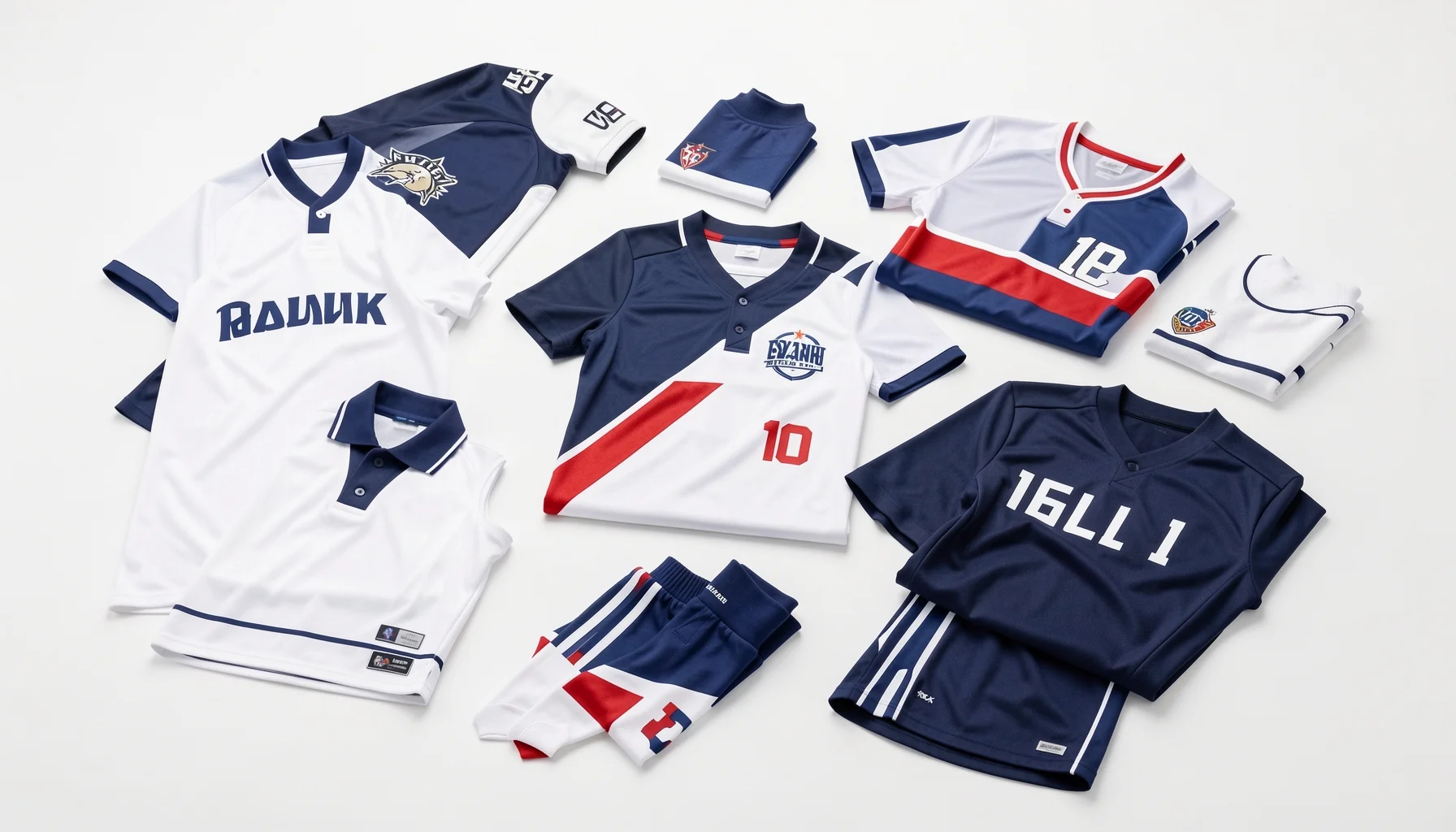
Choose stitching when your priority is a traditional, dimensional uniform; choose sublimation when you need a smooth, lightweight jersey with detailed artwork. Team sport, design, base color, and how the uniform will be worn should guide the decision.
 Custom Stitched Jerseys vs Sublimated Jerseys: Best Fit? - Which Option Suits Your Team’s Design and Use?
Match the finish to the activity
For competitive teams, comfort and weight can matter over a full game or season. Sublimated jerseys are commonly made with lightweight moisture-management polyester, making them a sensible option for players who want a smooth, breathable-feeling garment without a separate decoration layer. Complex sponsor logos or all-over patterns are also easier to include.
Stitched jerseys can be a better fit where the appearance is part of the experience: a club’s traditional uniform, a fan group’s apparel, or a keepsake jersey. They are also worth considering when a team prefers the raised look of twill and does not need gradients or extensive all-over artwork.
For low-contact sport or casual fan wear, added weight may be less important than the visual finish. For frequent, high-intensity play, teams should weigh that feel against the lighter construction typically associated with sublimation.
A practical buyer decision framework
Choose custom stitched jerseys when:
- Your team wants raised names, numbers, or logos with a traditional look.
- A tactile, dimensional finish matters more than minimizing garment weight.
- The design uses bold shapes and a manageable number of colors.
- The jerseys are intended for casual wear, fan use, collecting, or lower-intensity play.
Choose sublimated jerseys when:
- Your players want lightweight, smooth performance apparel.
- Your artwork uses gradients, intricate patterns, or many colors.
- You need extensive sponsor graphics without adding separate decorative layers.
- You want decoration that will not peel or crack as a surface print.
- The team is comfortable using high-polyester fabric in a white or light base color.
If both aesthetics matter, ask your supplier whether the specific design can combine printed elements with stitched details. Do not assume a hybrid finish is available or that it will retain the weight, price, or care characteristics of either method alone.
Design and production checks before ordering
A few checks can prevent the wrong finish from being chosen:
- Step 1: Review the artwork. Identify gradients, fine details, sponsor marks, and the number of colors. Complex full-garment graphics tend to suit sublimation; bold, separated lettering may suit stitching.
- Step 2: Choose the fabric and base color. Sublimation needs high-polyester material and works best on white or light fabric. Confirm what fabrics and colors the supplier offers.
- Step 3: Consider the playing conditions. Think about intensity, expected wear, and whether a raised, heavier decoration is comfortable for your players.
- Step 4: Compare the finished samples or proofs. Review how the actual design will look, including its scale, placement, and color treatment.
- Step 5: Confirm care and timing. Ask for washing guidance, production timing, and delivery estimates before approving the order.
What Do They Cost, and How Should Buyers Compare Value?
There is no universal price winner: stitched jerseys carry labor and material costs, while sublimation can be economical for complex artwork but may involve made-to-order production. Compare quotes for the same garment, design, quantity, and delivery terms.
Cost drivers and order economics
Stitched jerseys require fabric pieces to be cut and attached, with individual handling for names and numbers. Twill, thread, and labor can raise unit costs, particularly when a design adds multiple colors or layers.
Sublimation can deliver complex, multi-color artwork without a separate charge for each printed color. That does not mean every sublimated order is automatically cheaper: the process commonly uses custom panel printing and garment assembly, and some suppliers set minimum order quantities. The size of the order, fabric, design, and supplier’s production model all affect the final quote.
For a fair comparison, request pricing for the same number of jerseys and the same specifications. Include names and numbers, shipping, any setup charges, and the actual garment fabric. A low base price may not represent the final cost if the quote excludes personalization or delivery.
What Legendkits offers—and what to verify
Legendkits provides custom jerseys with a choice of stitched tackle twill or high-quality printing. The stated service terms include no minimum order quantity, a free digital design proof before production, production in 1 to 3 business days, estimated total delivery of 6 to 11 business days, and free standard shipping within the United States.
No exact jersey prices or volume-based price tiers are provided here, so it would be misleading to invent a dollar figure or claim one finish always costs less through Legendkits. Request a quote for your design and quantity, and confirm which printing method is recommended for the chosen garment. The no-minimum policy is particularly useful when a family needs one jersey or a small team needs a limited run rather than a bulk order.
Compare total value, not just unit price
A useful quote comparison should account for:
- Garment and finish: Confirm the fabric, weight, and whether the artwork is stitched or printed.
- Personalization: Check whether names, numbers, and sponsor graphics are included.
- Design approval: Verify whether a digital proof is included and whether revisions cost extra.
- Order size: Ask about minimums and how the unit price changes with quantity.
- Delivery: Include shipping and the expected arrival date, not just production time.
- Care and intended use: Consider whether the finish suits the team’s playing demands and maintenance habits.
Legendkits’ no-minimum ordering, free proof, and U.S. standard shipping can reduce barriers for small groups, but they do not replace a design-specific quote. Teams ready to order can explore custom team jerseys from Legendkits and confirm the finish, garment details, and delivery schedule before approving production.
FAQ
Stitched jerseys suit teams seeking a raised, traditional finish; sublimated jerseys suit teams prioritizing lightweight wear and complex graphics. The answers below address common buying questions about durability, comfort, design limits, and ordering.
Are sublimated jerseys more durable than stitched jerseys?
For the graphic itself, sublimation has a durability advantage: the ink is embedded in polyester fibers, so it will not peel or crack like a surface layer. Stitched decoration is also durable and resists fading, but its threads and edges can fray, snag, or unravel. Overall garment life depends on fabric quality, construction, wear, and care, so compare the finished product rather than treating either decoration method as indestructible.
Are sublimated jerseys better for sports?
They are often a practical choice for high-intensity sports because they are typically made from lightweight, moisture-wicking polyester and have a smooth surface without added twill or thread. The design does not create a separate layer over the fabric. However, “better” depends on your team’s needs: a stitched jersey may be preferable when a raised, traditional look matters more than minimizing weight or maximizing graphic complexity.
Can sublimated jerseys be made in dark colors or on cotton?
Sublimation is most effective on white or light-colored polyester. Because the ink is transparent, it generally will not show clearly against a dark fabric base. The process also requires synthetic material with high polyester content; it will not bond properly to cotton or other natural fibers. If your design requires a dark base or cotton garment, ask the supplier which alternative fabric or decoration method can meet that requirement.
Which jersey option is cheaper for a small team?
The answer depends on the design, garment, and supplier. Stitching involves twill, thread, and labor, and additional colors or layers may increase costs. Sublimation can handle complex color work without adding a separate charge per color, but custom panel production and supplier minimums may affect the order price. Legendkits accepts orders without a minimum, but exact jersey prices are not specified here; request a quote for your quantity and design.