

Custom stitched jerseys combine personalized names, numbers, and team colors with sewn-on tackle twill, creating a distinctive uniform finish. They suit teams and individuals who want a defined, fabric-based look without ordering in bulk. Understanding the construction, approval process, and care requirements helps buyers choose the right finish and prepare accurate artwork before production begins.
What Custom Stitched Jerseys Are and How They’re Built
Custom stitched jerseys are personalized athletic garments with names, numbers, or design elements made from fabric sewn onto the jersey rather than applied only through printing. The construction gives the decoration a layered, tactile appearance, while the overall result depends on the garment, design choices, and quality of execution.
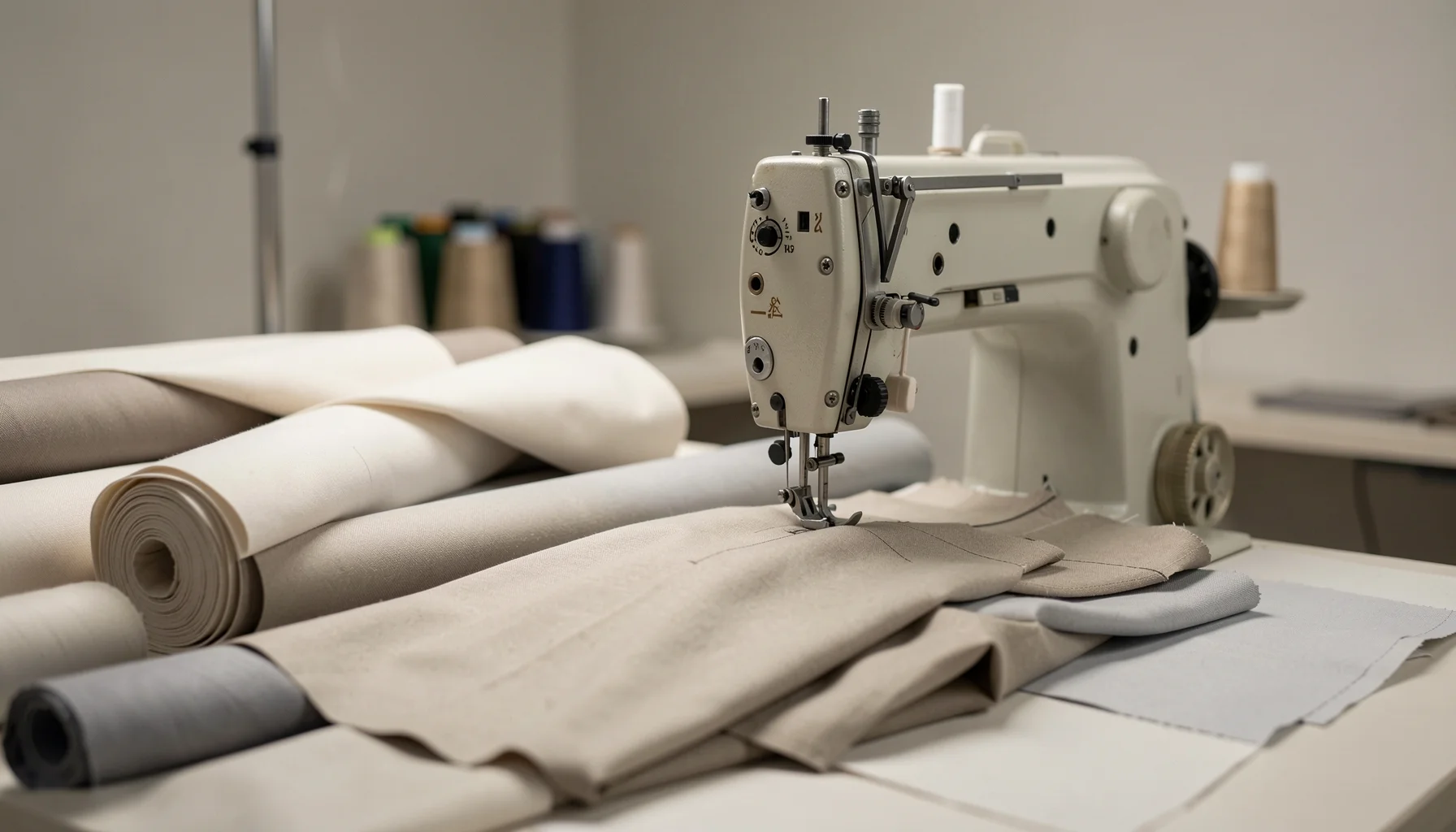 The Timeless Appeal and Durability of Custom Stitched Jerseys - The construction process of custom stitched jerseys in a professional workshop
What does “stitched” mean on a jersey?
In this context, stitching refers to tackle twill: fabric pieces cut into shapes, such as letters or numerals, and sewn onto the jersey. The decoration is physically attached to the garment, rather than being represented solely by ink or another printed surface. That difference is visible and tactile, but it does not automatically make one finish right for every team.
Stitched decoration is often selected when a team wants a traditional, dimensional look. Printed decoration, by contrast, can be a practical choice when a design relies on details or visual effects that are better represented as printed graphics. The best option depends on the design, intended appearance, and how the jerseys will be used.
It is useful to separate construction from performance claims. Stitching describes how an element is applied; it does not, by itself, establish a garment’s fabric composition, wash instructions, or lifespan. Those depend on product specifications and care. Buyers should consider the stitched finish as one part of the uniform decision, not as a substitute for checking garment guidance.
How the jersey design comes together
A custom jersey has several coordinated components: the selected style and colorway, team identity, player name, number, and chosen finish. These elements work together visually. A readable number, for instance, must stand out against the body color, while names and other details need enough space to remain clear.
For stitched tackle twill, the design must translate into cut fabric shapes that can be sewn onto the garment. That makes legibility and sensible detail especially important. Intricate artwork, very small lettering, or tightly spaced elements may not translate as intended at jersey scale. Reviewing a proof provides a chance to spot those issues before production.
Legendkits provides a free digital design proof for every order, which the customer reviews and approves before manufacturing starts. This is a key quality-control checkpoint: it gives the team an opportunity to verify spelling, numbers, colors, and layout while the design can still be corrected. More information about the ordering process is available through Legendkits.
Why teams choose a stitched finish
Teams may choose stitched decoration to establish a classic uniform appearance, distinguish a special group, or create personalized apparel with a more dimensional surface. Youth organizations, amateur leagues, local clubs, families, and fan groups can all have different priorities: some value a traditional look, while others may put greater emphasis on a particular graphic treatment.
Small quantities matter, too. Conventional uniform sourcing can be difficult for a team that needs only a few jerseys, or for an individual seeking personalized fan gear. Legendkits uses on-demand manufacturing and requires no minimum order quantity, so a single jersey or a small group order is possible.
The practical takeaway is to define the goal before selecting the finish. Decide whether the main priority is a sewn-on appearance, a printed graphic, or a combination of team-specific colors and personalization. Then check that the chosen style and artwork support that goal. The result is more likely to feel cohesive because decisions about appearance and production are made together.
Specifications and Workflow: Stitched Versus Printed
The essential differences between custom stitched jerseys and printed jerseys are the decoration method, the appearance of the finish, and the choices available during ordering. Legendkits offers stitched tackle twill or high-quality professional printing, and each order follows a proof-approval process before production begins.
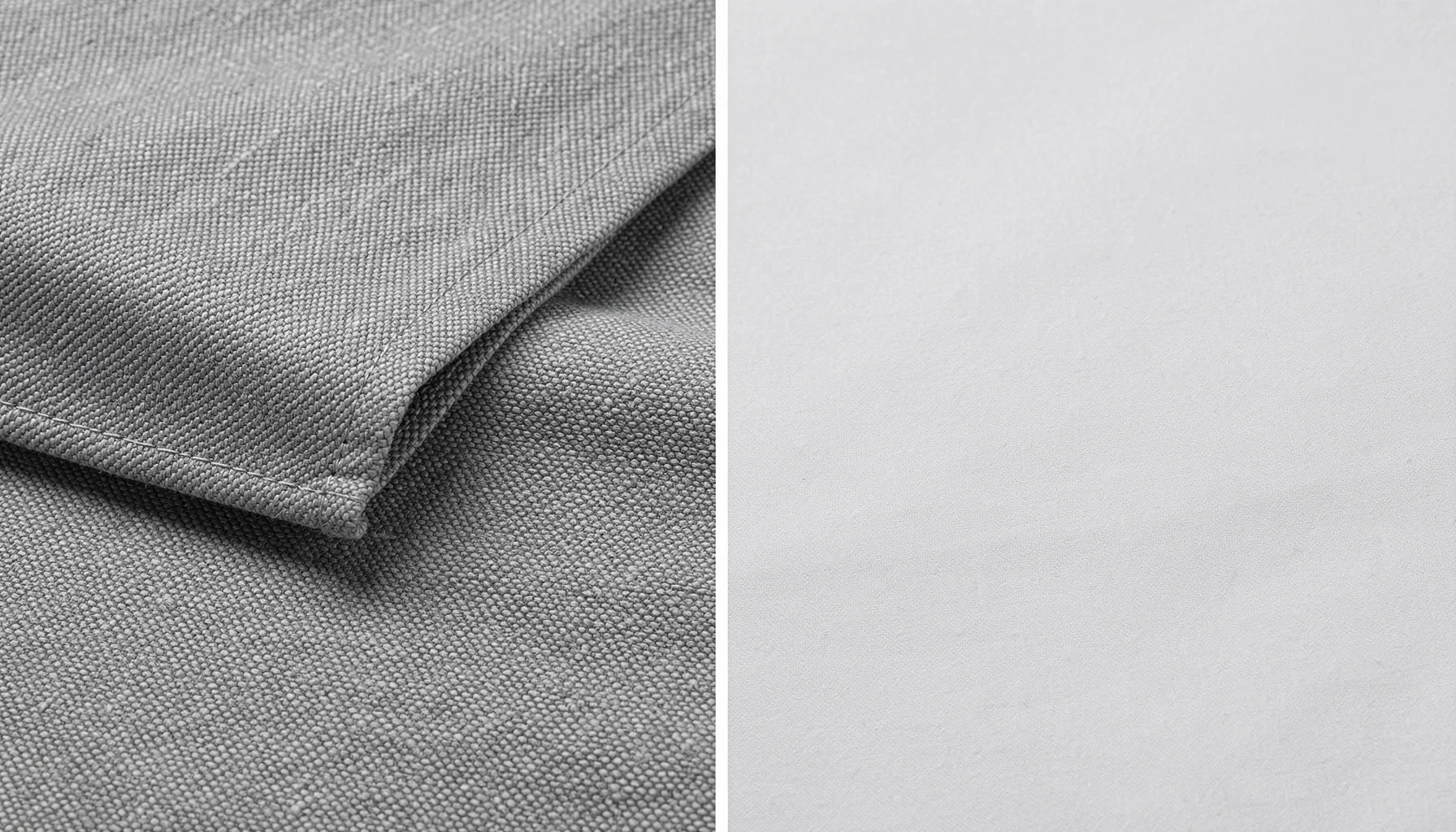 The Timeless Appeal and Durability of Custom Stitched Jerseys - Visual comparison between stitched tackle twill and flat printed jersey designs
A practical comparison of available options
The table below compares the confirmed ordering and production characteristics. It avoids assumptions about fabric composition, exact stitch counts, print chemistry, or wash durability, which are not specified in the available product information.
| Specification or workflow | Stitched tackle twill | Professional printing |
|---|---|---|
| Decoration method | Sewn-on fabric shapes | Printed design |
| Visible finish | Layered, fabric-based appearance | Printed surface appearance |
| Personalization supported | Names and numbers can be customized | Names and numbers can be customized |
| Team colors | Selected as part of the design | Selected as part of the design |
| Design proof | Free digital proof provided for approval | Free digital proof provided for approval |
| Minimum order quantity | No minimum order required | No minimum order required |
| Production after approval | Manufacturing takes 1–3 business days | Manufacturing takes 1–3 business days |
| Estimated order-to-arrival window | 6–11 business days | 6–11 business days |
| Standard U.S. shipping | Free | Free |
The comparison is about construction and workflow, not a universal claim that one finish lasts longer. Actual care and performance depend on the specific garment and its instructions. Teams should also confirm that their selected design is suitable for their intended finish before approving the proof.
What production timing means
Legendkits states that manufacturing is completed within 1 to 3 business days after the order is ready for production, and estimates 6 to 11 business days from order to arrival. These are different measures: production time describes the manufacturing stage, while the delivery window includes the broader journey to the customer.
The proof approval step matters to the schedule. Production begins after the customer approves the digital design proof, so delayed review or requested revisions can affect when the order enters manufacturing. Teams working toward an event should provide complete personalization details early and designate someone to review the proof promptly.
Free standard shipping applies to orders within the United States. The stated delivery window is an estimate, not a reason to postpone ordering until the last moment. For a tournament or team launch, allow time to gather names and numbers, inspect the proof, and receive the jerseys before the event. Planning around these steps is more reliable than treating the manufacturing lead time as the entire fulfillment timeline.
Choosing the finish for the design
A useful way to choose between stitched and printed decoration is to start with the intended visual effect. Tackle twill suits buyers seeking sewn-on fabric lettering and numbers. Printing is an alternative for teams that prefer a printed surface. Neither option can be called universally superior without considering the artwork, garment, and requirements of the team.
Ask a few practical questions:
- Does the team want a layered, tactile decoration or a printed look?
- Are names and numbers clear at the size and placement shown?
- Do the team colors provide enough contrast for easy reading?
- Does the design contain details that may be difficult to reproduce as cut fabric shapes?
- Has the team agreed on one spelling and number list?
When uncertain, share the intended design details through the ordering process and use the proof to evaluate the actual layout. A proof can reveal spacing, alignment, and color issues more clearly than a verbal description. The goal is not to choose a finish based on a general durability claim; it is to select the construction that aligns with the design and review the finished layout carefully.
How to Order and Approve Custom Stitched Jerseys
Ordering custom stitched jerseys is a sequence of decisions: choose a style and finish, enter accurate team details, review the digital proof, approve it, and allow production and delivery. Treating each step as a checkpoint reduces avoidable corrections and helps a group coordinate its order.
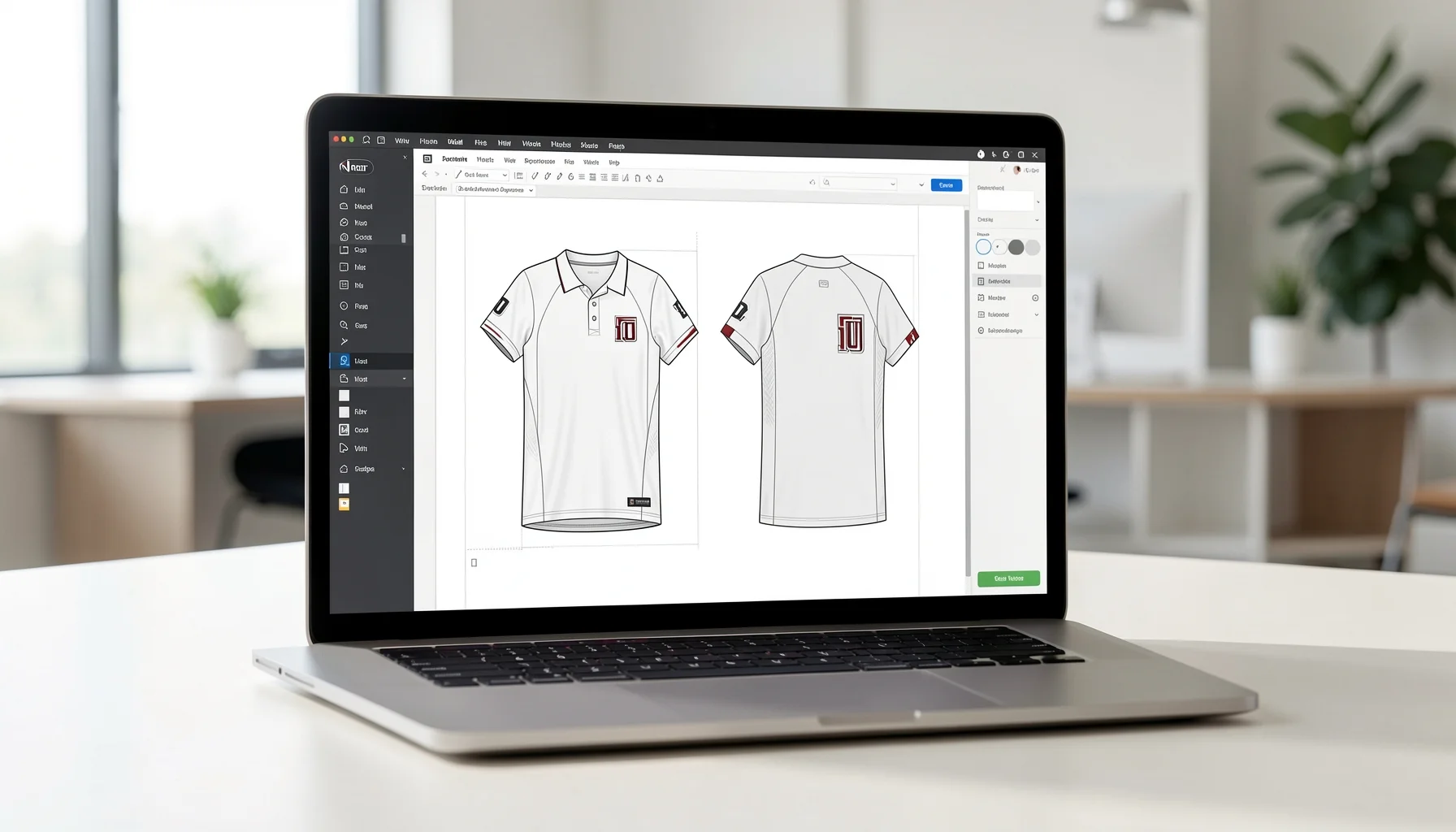 The Timeless Appeal and Durability of Custom Stitched Jerseys - Digital design and approval process for custom team apparel
Step 1: Select a style, colorway, and finish
Begin by identifying the jersey style and colorway that fit the team’s visual identity. Then choose between stitched tackle twill and professional printing. If the group already has established colors, use consistent references rather than relying on different people’s interpretations of “navy,” “royal,” or “gold.”
The decision should account for the full design, not just the decoration method. Names, numbers, and color combinations need to work together on the selected jersey. A strong contrast between the background and key details can help players and spectators read numbers quickly. If the design is intended for fan gear rather than team play, the same principle applies: clear hierarchy makes personalization easier to recognize.
Before moving forward, confirm that the person placing the order has authority to make design decisions. For a club or youth team, that may mean consulting the coach, organizer, or person responsible for team identity. Agreement up front prevents a late change in color or finish after the details have been entered.
Step 2: Prepare names, numbers, and team details
Collect personalization in a single, verified list. This is particularly important when several players are included: the order coordinator should confirm each name’s spelling and every number with the person or family concerned. Avoid building the final order from scattered messages or handwritten notes, where omissions and transposed digits are easy to miss.
A practical checklist includes:
- Confirm the final roster and the spelling of each name.
- Verify each player number against the team’s approved list.
- Check that all requested jerseys use the intended style and colorway.
- Confirm whether the order uses stitched or printed decoration.
- Identify one person responsible for reviewing the proof.
Small-batch ordering is useful for late additions, replacements, and individual fan jerseys because there is no minimum order quantity. Still, every order benefits from precise information. If a group places separate orders, share a consistent design reference and ensure each person uses the agreed team colors and finish. This helps maintain a unified appearance even when orders are not submitted together.
Step 3: Review the digital proof, then approve
After personalization is submitted, Legendkits provides a free digital design proof for review before production begins. The proof is the moment to check what will be manufactured; approval should not be treated as a formality. Examine the design at a practical level, focusing on details that are hard to correct once the order enters production.
Review:
- Name spelling, number accuracy, and the association between each name and number.
- Team colors and the placement of visible design elements.
- The overall legibility of letters and numerals.
- Whether the chosen finish matches the intended appearance.
- Any differences between the proof and the team’s agreed design.
If something is incorrect, request a correction before approving. Once approved, the item enters the manufacturing queue. This boundary is important: production follows approval, so the proof should reflect a complete, agreed design. Keep the approved version as the reference for future additions or replacements, especially when a team expects to order more jerseys later.
Step 4: Plan for production and delivery
Once approved, manufacturing takes 1 to 3 business days, with an estimated 6 to 11 business days from order to arrival. Teams should work backward from the date the jerseys are needed, leaving time to collect roster information and review the proof. The faster production window does not eliminate the need to organize the order early.
For U.S. orders, standard shipping is free. The total delivery estimate is still a planning guide, so avoid placing an event-critical order at the last possible moment. A coordinator can reduce timing risks by collecting details in advance, reviewing the proof as soon as it is available, and making sure the shipping destination is correct.
After delivery, compare the received items against the approved design and order details. If a team ordered multiple personalized jerseys, check names and numbers systematically rather than assuming that a quick glance will catch every mismatch. This final check supports a smoother handout and helps identify any concern promptly.
Design Tips, Common Pitfalls, and Practical Examples
The most reliable way to avoid custom jersey problems is to control the details teams can verify: accurate personalization, readable design, a clearly assigned proof reviewer, and realistic timing. These steps help prevent common errors without relying on unsupported claims about fabric performance.
Pitfall: treating the proof as a preview rather than approval
A digital proof is a decision point, not simply an illustration. If the customer approves a misspelled name or incorrect number, the design may proceed to production with that error. Reviewers should check every personalized element against the authoritative roster, not against memory or an informal group chat.
For a team order, a two-person review can be effective: one person checks the roster, while another checks the design layout and colors. This is a workflow recommendation, not a production requirement. It is especially useful when many names and numbers are involved, because different reviewers may notice different issues.
Record the approved version and keep it available for later reference. This reduces the chance that a replacement jersey will use a slightly different color or layout. If the team changes its identity later, treat that as a deliberate design update rather than mixing old and new choices unintentionally.
Pitfall: choosing a finish without considering the artwork
Stitched tackle twill creates a sewn-on fabric appearance, while printing creates a printed surface. Teams sometimes focus on the word “stitched” as a general marker of quality, but the finish is only suitable if it aligns with the desired design. Highly detailed artwork or small lettering may need extra scrutiny to ensure the proof is clear and appropriate for the selected method.
Consider a local recreational team that wants player names and large numbers in its established colors. If its priority is a fabric-based, dimensional look, stitched tackle twill may fit the brief. A fan group requesting a design where the printed look is preferred may choose professional printing instead. These examples illustrate how to match the finish to intent; they do not guarantee that every design can be produced identically in either method.
If an element appears crowded or unclear in the proof, ask for clarification or a revision before approval. A simple, readable layout is often more useful on a jersey than a complex design that looks impressive in a small digital image but loses clarity at garment scale.
Pitfall: leaving coordination until the deadline
Group orders often depend on information from several people. A late roster change, missing number, or inconsistent color choice can delay approval. The remedy is organizational: name one order coordinator, establish a cutoff for submitting details, and make the proof reviewer responsible for collecting final corrections.
A family ordering one personalized fan jersey can use the same process on a smaller scale: decide on the style and finish, verify the name and number, then inspect the proof. A youth team can extend it by checking the entire roster and maintaining an approved design reference. Because no minimum order is required, individuals and small groups can order without assembling a large bulk purchase, but careful details still matter.
For care after delivery, follow the garment’s supplied care instructions. The available specifications do not establish a particular washing method or guarantee a fixed service life for stitched or printed decoration. Avoid assuming that one finish can be cared for in a specific way without checking the product guidance.
Planning Team Orders and the 2026 Outlook
In 2026, effective custom uniform planning still depends on sound fundamentals: accurate team data, clear design decisions, proof approval, and enough lead time for production and delivery. Legendkits’ on-demand model supports small-batch and individual needs, making disciplined coordination valuable even when a team does not need a bulk order.
Considerations for clubs and larger groups
For a club coordinating multiple squads, the main challenge is consistency. Different teams may need distinct colors or names, but a shared design reference can preserve a recognizable identity. Establish which elements are fixed—such as the club’s core colors—and which may vary by squad or event. Confirm those choices before individual order details are submitted.
The no-minimum model is relevant to organizations with uneven quantities. A club can use it for a small group, a replacement need, or an individual purchase without having to meet a traditional bulk threshold. That flexibility does not mean every order will automatically share the same design. Order coordinators should retain the approved proof and document the selected style, colorway, and finish so future orders can follow the intended standard.
Organizations should also distinguish ordering flexibility from procurement policy. A club may still have its own approval process for apparel, artwork, or team colors. Agreeing on those internal decisions before proof approval can prevent rework and avoid confusion about who has authority to finalize the design.
A practical 2026 planning framework
No unsupported industry percentage or durability benchmark is needed to assess a jersey order. Teams can use concrete, verifiable checkpoints instead:
- Design readiness: Are the style, colorway, and finish agreed?
- Data readiness: Are all names and numbers confirmed?
- Approval readiness: Is a designated person available to inspect the proof?
- Schedule readiness: Does the plan account for the 1–3 business-day production period and estimated 6–11 business-day delivery window?
- Fulfillment readiness: Is the delivery destination correct, and is there a plan to check the order when it arrives?
This framework applies to youth organizations, amateur leagues, local clubs, families, and fan groups. It is particularly helpful when ordering close to a tournament or season start. Build in time for decisions and proof review instead of treating production speed as a substitute for preparation.
The 2026 strategic outlook is therefore practical rather than speculative: small-batch access and personalization are most useful when paired with careful coordination. For Legendkits, the combination of no minimum order quantity, a free proof, two finish options, and defined production and delivery estimates provides a clear workflow. Customers can make the most of it by supplying complete details and approving only a design they have checked.
How Legendkits approaches small-batch fulfillment
Legendkits serves teams and individuals who need customized athletic apparel without traditional bulk-order requirements. The service combines personalization, a choice of stitched tackle twill or professional printing, and a proof-first workflow. These features address common small-order needs: ensuring names and numbers are correct, choosing a suitable visual finish, and confirming the design before manufacturing.
The process is deliberately sequential. Customers select a style, colorway, and finish; enter team details and personalization; review and approve a digital proof; then the order enters production and ships to the customer. Production takes 1 to 3 business days, while the estimated total delivery window is 6 to 11 business days. Free standard shipping is provided for orders within the United States.
This approach is useful when a team’s order size is too small for conventional bulk purchasing or when an individual wants personalized fan gear. The key is to treat the proof and roster checks as part of fulfillment—not as optional extras. That is how a flexible ordering model can support a coordinated, professional-looking result.
FAQ
Are custom stitched jerseys more durable than printed jerseys?
Stitched tackle twill is sewn-on fabric, while printing applies a design as a printed surface. Those are different construction methods, but the available specifications do not establish a universal durability ranking or a guaranteed lifespan for either finish. Garment materials, production details, use, and care all matter. Choose based on the appearance and construction you want, then follow the care instructions supplied with the jersey rather than assuming one method always lasts longer.
Can I order a single custom stitched jersey?
Yes. Legendkits has no minimum order quantity, so a customer can order one personalized jersey or a small group. This is useful for an individual seeking fan gear, a family ordering a personalized item, or a team that needs a limited number of jerseys. The same workflow applies: select a style and finish, enter accurate personalization, review the free digital proof, and approve it before manufacturing begins.
How long does it take to receive a custom stitched jersey?
Legendkits states that production takes 1 to 3 business days and estimates a total order-to-arrival window of 6 to 11 business days. These timeframes describe different parts of fulfillment: production is the manufacturing stage, while the total estimate includes delivery. Proof approval comes before production, so teams should submit complete details and review the proof promptly. U.S. orders receive free standard shipping.
What should I check on the digital design proof?
Check every name and number against the final roster, then review team colors, placement, spacing, and overall legibility. Confirm that the proof reflects the intended jersey style and the selected finish—stitched tackle twill or professional printing. For a group order, have a designated reviewer compare the proof with the team’s agreed design and personalization list. Request corrections before approval; once approved, the item enters the manufacturing queue.