

Custom team jerseys no minimum let recreational teams order only what they need, whether that means one replacement shirt or a complete small-squad set. For league organizers, this changes how uniforms can be planned: teams can personalize names, numbers, colors, and logos without meeting a bulk-order threshold, then use a proof-and-approval workflow before production.
What “No Minimum” Changes for Recreational Teams
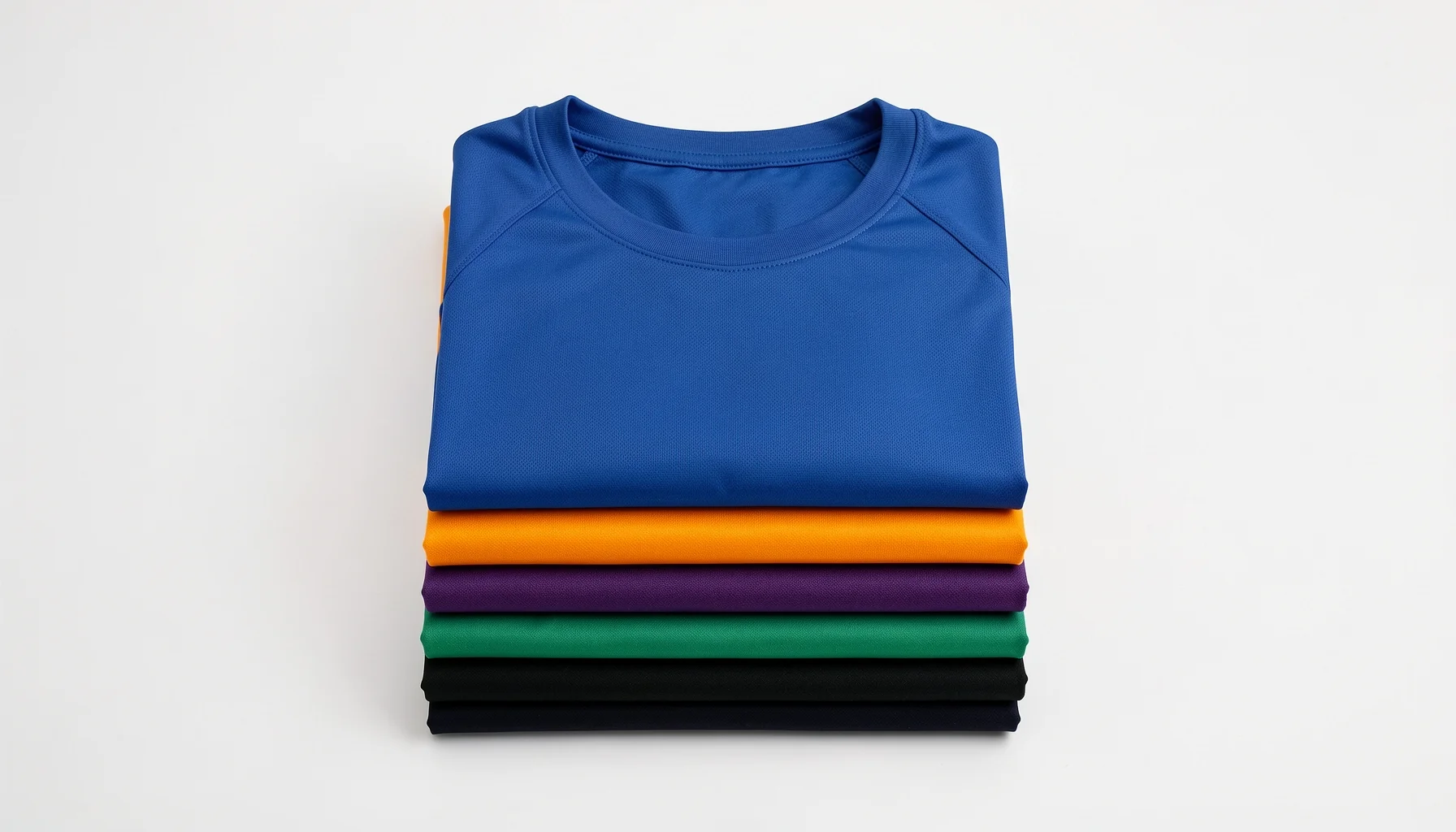 Why Custom Team Jerseys No Minimum Are Changing Recreational Sports - How to Plan and Place a Small-Batch Order
A no-minimum jersey service allows an order to start with one garment rather than requiring a team to buy a predetermined quantity. That flexibility can help small leagues, clubs, and families manage changing rosters, replace damaged gear, and test a design without committing to a large run.
How the model works in practice
Traditional uniform purchasing often assumes a group will order the same style and quantity at once. That can be difficult for a recreational organizer whose roster is small, whose players join at different times, or whose budget is spread across families. A no-minimum model removes the quantity threshold: a team can order one jersey, a few jerseys, or enough for a roster.
The model does not mean every item is automatically identical or that every later order will arrive immediately. Each order still needs its design details, proof review, production, and shipping. Organizers should treat an additional jersey as a new fulfillment cycle and allow for the stated delivery window.
For Legendkits, customers can personalize jerseys with names, numbers, team colors, and logos. They can choose stitched tackle twill or durable printing, and receive a free digital design proof before production begins. These features make small-run ordering practical without removing the need to check design accuracy.
Why small squads benefit from flexible quantities
A 3v3 or 5v5 team may not need the same quantity as a large league roster. With no minimum, organizers can order for the active squad rather than buying extras simply to satisfy a supplier’s batch requirement. That is a form of quantity flexibility, not a promise that each individual garment costs less.
The distinction matters when evaluating “cost flexibility.” A smaller order can reduce the amount of gear a group must purchase at one time, but the final cost still depends on the actual product and order details. Teams should compare the total cost of the quantity they need, not assume that a no-minimum policy guarantees a lower per-item price.
This approach also supports mid-season replacement. If a jersey is lost or damaged, the team can order a replacement rather than rebuilding a full order. Families and fan groups can likewise order personalized apparel without being bundled into a team-sized purchase.
A flexible order still needs a reliable process
No-minimum ordering is most useful when teams keep their specifications organized. The organizer should maintain the approved colors, logo file, name spellings, number assignments, and selected finish in one accessible record. That gives a later order a clear reference point and reduces the chance of avoidable differences.
Legendkits’ process includes online design selection and a digital proof, followed by production after approval. According to the company’s stated workflow, production takes 1 to 3 business days, and total delivery takes 6 to 11 business days with standard U.S. shipping. These are useful planning figures, but teams should allow time for proof review and avoid scheduling an order around an unconfirmed delivery date.
Specifications and Workflow Mechanics
The practical specifications of a custom jersey order are its personalization choices, finishing method, proof approval, production stage, and shipping window. Organizers can use the table below as a checklist when comparing a small order with a full-roster order.
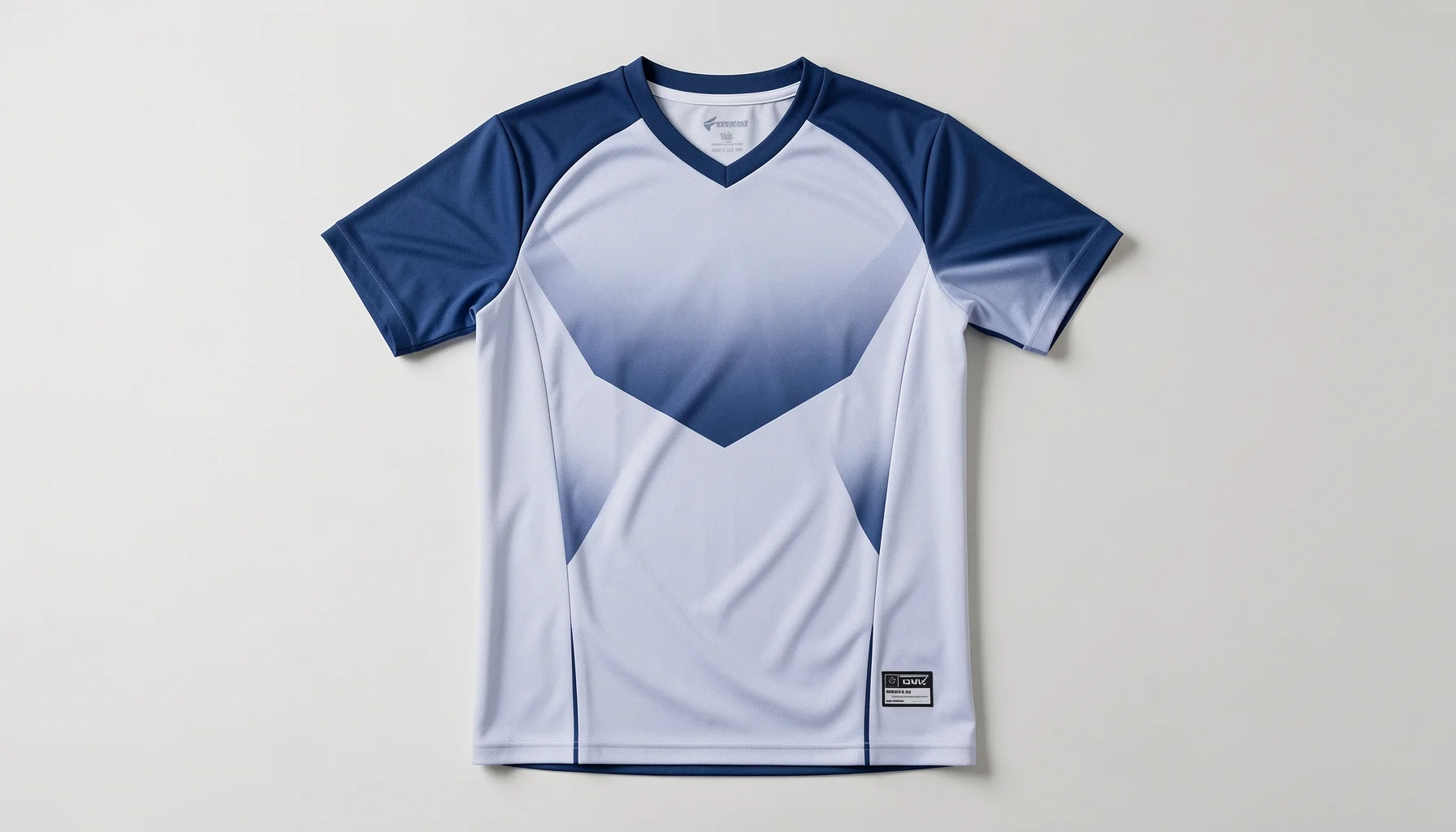 Why Custom Team Jerseys No Minimum Are Changing Recreational Sports - What “No Minimum” Changes for Recreational Teams
The order components organizers need to control
A small-batch order has several linked parts. The design inputs establish the jersey’s visual identity; the proof provides an opportunity to catch errors; and the production and shipping stages determine when the apparel may arrive. Keeping these stages distinct helps prevent a common planning mistake: treating production time as the total delivery time.
| Workflow component | Available detail | Organizer’s practical check |
|---|---|---|
| Order quantity | No minimum; orders can be for one jersey or a full roster | Confirm the exact number needed, including replacements |
| Personalization | Names, player numbers, team colors, and logos | Verify spelling, number assignments, and the correct logo |
| Finish | Stitched tackle twill or durable printing | Choose a finish that suits the team’s design and preferences |
| Design assistance | Free digital design proof before production | Review the proof before approving the order |
| Production | 1 to 3 business days after approval | Allow time for review before the production stage |
| Delivery | 6 to 11 business days total, via standard U.S. shipping | Plan around the full stated delivery window |
| Shipping | Free standard shipping on U.S. orders | Confirm the destination and applicable shipping method |
| Group-order detail | Group discounts start at two items using code “LK5” | Check current terms at checkout rather than assuming eligibility |
The table summarizes stated Legendkits details, not a guarantee that every order will follow an identical schedule. The clock for production begins after design approval, and total arrival time includes more than manufacturing. Teams should review the current order information and leave a buffer when uniforms are needed for a tournament or opening day.
Choosing between stitched tackle twill and printing
The finishing decision is part of the design specification. Legendkits offers premium stitched tackle twill and high-quality, durable printing. The available facts establish these as two finishing choices, but do not specify that one is universally better, more durable in every condition, or suitable for every jersey design.
A team can make a more reliable choice by first listing its requirements: the visual effect it wants, how names and numbers should appear, and whether the same finish should be used across the order. If unsure, organizers can review the design options through the online tools and discuss the proposed appearance during the proof stage.
Consistency is especially important when ordering replacements. Keep a record of the original finish and approved design so a later jersey can follow the same specification. Do not rely on memory or an old photograph alone; the proof is the relevant checkpoint for confirming the order’s submitted details.
Proof approval is a quality-control step
A digital proof is more than a preview. It gives the team a chance to check that the design reflects the submitted instructions before production begins. Since each jersey may include individualized names and numbers, a proof review should cover both the shared design and the personal details.
A useful review checks:
- Names: spelling, capitalization, and any agreed formatting.
- Numbers: correct player assignment and legibility in the design.
- Team identity: colors and logo placement as shown in the proof.
- Finish: whether the selected stitched or printed treatment matches the team’s intended look.
- Order scope: whether the proof corresponds to the requested garments.
The organizer should collect corrections in one response rather than sending scattered changes. Approval should happen only after the group has checked the details it cares about; once approved, the order moves into production.
How to Plan and Place a Small-Batch Order
A well-managed custom order begins with a clear roster and ends with a documented proof approval. Teams can reduce avoidable errors by assigning one person to coordinate specifications, consolidate feedback, and communicate the final decision.
 Why Custom Team Jerseys No Minimum Are Changing Recreational Sports - Specifications and Workflow Mechanics
Step 1: Define the order before opening the design tools
Start by deciding whether the order is for a full team, a small squad, a replacement, coaches, or supporters. Write down the quantity and identify which garments require individual names or numbers. For a replacement, retrieve the team’s approved design record rather than reconstructing it from memory.
Next, gather the shared design inputs: team colors, logo, and preferred jersey style. Confirm who has authority to approve the final design. A single point of contact can prevent conflicting instructions, especially when parents, players, and coaches all have opinions.
This preparation also makes cost planning more transparent. A no-minimum order allows the team to request only the quantity it needs; it does not remove the need to establish a budget or agree on who is paying. If the order includes multiple people, confirm the final count before submitting it and review any group-order terms on the current site.
Step 2: Configure personalization and finish
Use the online tools to select the jersey style, colors, and personalization details. Enter names and numbers carefully, then check each entry against the current roster. If a player’s name or number is not finalized, resolve that before approval rather than assuming it can be changed later.
Select either stitched tackle twill or durable printing as the finish. The right choice depends on the intended appearance and the team’s preferences; the available specifications do not establish a universal winner. Make the decision consistently across the group unless the order interface and design proof clearly support different treatments.
When the order is for a team, use a simple roster sheet to keep the details aligned. For example, one column can list the player, another the number, and a third the exact name text to be submitted. That makes it easier to compare the order with the proof and to preserve a reference for future replacements.
Step 3: Review the proof, approve, and schedule delivery
Legendkits provides a free digital design proof before production. Compare it with the submitted roster and design instructions, checking both the shared artwork and each personalized detail. If something is wrong, send clear corrections and wait for a revised proof rather than approving an inaccurate version.
Once approved, production is stated to take 1 to 3 business days. Total delivery is stated as 6 to 11 business days through standard U.S. shipping. These figures are planning guidance, not a reason to leave the order until the last moment: the team must still complete design review, and the full arrival window is longer than production alone.
For a season start or event, set an internal deadline well before the date the jerseys are needed. Make one person responsible for tracking approval and order status, and communicate the expected window to players without promising a specific arrival day that has not been confirmed.
Practical Tips, Pitfalls, and Team Examples
The biggest advantage of flexible ordering is the ability to match quantity to a real need. The biggest operational risk is assuming that a small order requires less coordination than a large one; personalized details still need careful checking.
Avoid common order errors
The most preventable mistakes are incorrect names, duplicated or incorrect numbers, inconsistent colors, and approval of a proof before all stakeholders have reviewed it. These problems are not unique to small orders, but they can be harder to catch when an organizer submits only one or two garments under time pressure.
Use a short control process:
- Freeze the roster before entering names and numbers.
- Assign one proof reviewer who can consult the coach or team lead.
- Check every personalized line against the roster, not against memory.
- Keep the approved proof and design details for future orders.
- Order with a delivery buffer based on the full stated window.
For replacements, confirm the intended match against the original team specification. A replacement can be functionally useful even if the design has changed, but teams seeking a consistent appearance should use the same colors, logo, personalization format, and finish where possible.
Use cases: small squads, replacements, and supporter gear
Consider a five-player recreational team that needs uniforms but does not want to purchase a large batch. A no-minimum order makes it possible to request the required squad quantity. The organizer can configure the team’s colors and logo, enter each player’s name and number, and review the proof before production.
A different case is a mid-season replacement. If one jersey is lost or damaged, the team can request a single garment rather than reordering for every player. The original design record becomes particularly useful here: it helps the organizer reproduce the intended look and avoid submitting a new interpretation.
The same model can support coaching apparel, parent or fan replicas, and design prototyping. A club can test a visual direction on a limited order before deciding whether it fits a broader team identity. That is a practical way to gather feedback, but it should not be confused with a guarantee that a test garment will predict every aspect of a future larger order.
Coordinate group orders without creating confusion
Group ordering works best when one person controls the master specification and each participant confirms only their own details. If several families send separate versions of a logo or color instruction, the organizer can accidentally combine inconsistent inputs. A shared roster and one approved design reference reduce that risk.
Legendkits states that group discounts start at two items with code “LK5.” Because discount eligibility and terms can change, organizers should verify the current conditions during checkout rather than building a budget around an unconfirmed assumption. Free standard shipping is stated for U.S. orders; teams should still check the applicable order details and destination before submission.
For clubs that expect repeat orders, keep a simple uniform record with the approved proof, finish choice, roster history, and order date. This is useful for replacement jerseys and for onboarding new organizers. It also helps the group distinguish a genuine design update from an accidental variation.
Organizing Repeat Orders and Planning for 2026
For recreational organizations, the strategic value of no-minimum ordering is operational flexibility: teams can make smaller decisions as their rosters and needs change. In 2026, organizers can treat on-demand, small-run fulfillment as one option for avoiding unnecessary bulk commitments, while still planning around proof approval and delivery lead time.
Build a repeat-order system for the club
A club that orders repeatedly should document the process, not just the product. Keep a current record of the approved logo, colors, personalization format, selected finish, and proof. Assign responsibility for maintaining that record so a new coach or volunteer can place a replacement order without guessing.
A repeat-order checklist can include:
- The team or club name and approved identity assets.
- Current player names and number assignments.
- The finish selected for the previous order.
- The final proof used as the visual reference.
- The person authorized to approve changes.
- The expected event date and ordering buffer.
This simple system supports cost flexibility by helping the organization order only what is required while avoiding preventable rework. It does not guarantee a particular per-item cost or eliminate all differences between separate orders. Its purpose is to make decisions and specifications repeatable.
Considerations for larger organizations
A youth association, multi-team club, or league may have more complex needs than a single squad. Before adopting a small-batch workflow across several teams, decide how shared brand elements will be controlled and which details each team can customize. A common logo and color standard can coexist with team-specific names and numbers, but someone must maintain the rules.
Organizations should also establish a practical approval chain. Coaches can confirm roster details, a club administrator can check shared branding, and one designated person can approve the proof. This division is useful only if responsibilities are clear; too many approvers can delay a small order as easily as a large one.
Legendkits’ stated process—online customization, free proof, approval, production, and standard U.S. shipping—provides a defined sequence for that planning. Teams should verify current product and fulfillment details when ordering, particularly if they have a fixed event date or are coordinating multiple groups.
A grounded 2026 outlook
As of 2026, no-minimum ordering is a practical fit for recreational programs that need small runs, replacements, or limited design tests. The relevant change is not that every team will abandon bulk purchasing; it is that organizers have another way to match order quantity to roster reality and timing.
A balanced strategy is to use small-batch orders where demand is uncertain—such as for a new squad, a replacement, or a prototype—and evaluate larger orders separately when a roster and design are stable. That keeps the decision tied to actual requirements rather than assuming that one purchasing model suits every team.
From Legendkits’ perspective as a specialist in custom team apparel, the essential planning principles are straightforward: define the need, keep personalization accurate, review the proof, and allow for the full delivery window. Those practices make a flexible order more predictable without overstating what a no-minimum policy can guarantee.
FAQ
Can a recreational team order just one custom jersey?
Yes. Legendkits has no minimum order quantity, so a team or individual can order a single jersey or enough to outfit a roster. The order can include custom names, numbers, team colors, and logos. A one-item order still follows the design and proof workflow, so the organizer should verify the submitted details and approve the digital proof before production begins.
How long does a custom team jersey order take?
Legendkits states that production takes 1 to 3 business days after the design proof is approved, with total delivery taking 6 to 11 business days through standard U.S. shipping. Production time is not the same as total arrival time. Teams should allow time to review the proof and plan around the full stated delivery window, especially when uniforms are needed for a scheduled event.
What should a team check on the digital design proof?
Review the proof against the approved team instructions and roster. Check every name and number, along with the colors, logo, and selected finish—stitched tackle twill or durable printing. Confirm that the proof represents the requested order before approving it. A designated reviewer should collect any corrections into one clear response, then check the revised proof rather than relying on an earlier version.
Is no-minimum ordering a good fit for replacement jerseys and fan apparel?
It can be useful for both. A team can order a single replacement for lost or damaged gear instead of purchasing a full batch, while parents and fans can order personalized replica jerseys without meeting a team-sized quantity threshold. For a close visual match, keep the original proof and record the approved design details. Each new order should still be reviewed for accuracy and planned using the current delivery information.