

No minimum custom baseball jerseys with free shipping let individuals, families, and teams order personalized uniforms without meeting a bulk requirement or paying standard U.S. shipping charges. At Legendkits, customers can design their own baseball jersey online by choosing a style, colors, and finish, adding names and numbers, approving a free digital proof, and then moving the order into production. Production takes 1–3 business days; total delivery is typically 6–11 business days.
What No-Minimum Custom Baseball Jerseys Mean in Practice
A no-minimum custom jersey order removes the requirement to buy a fixed quantity. That matters when a team needs a single replacement shirt, a family is ordering for a small group, or a club wants to test a design before outfitting more players. Free standard shipping on U.S. orders makes the fulfillment process more predictable, though production and delivery still take time.
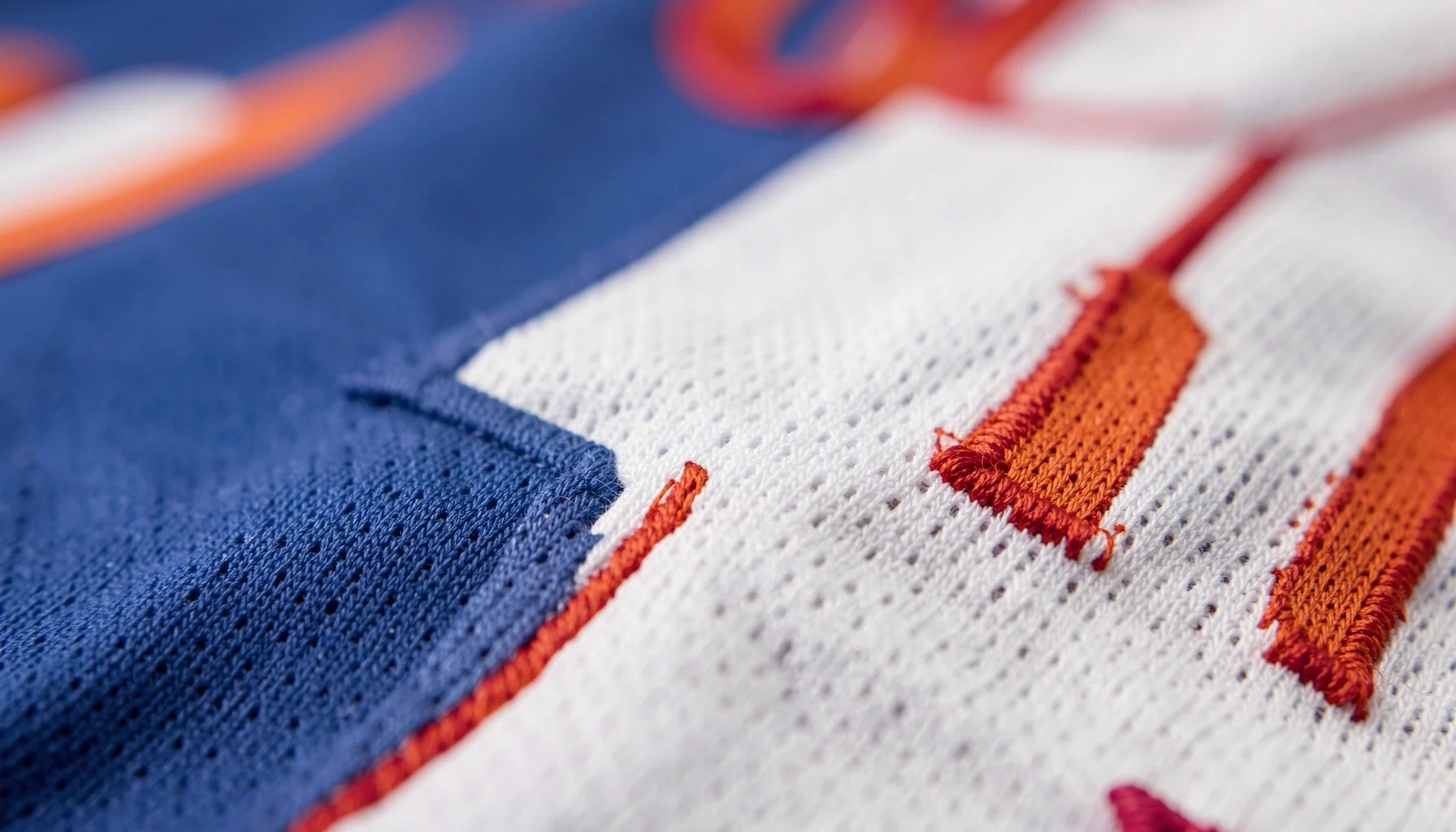 Custom Baseball Jerseys With No Minimum & Free Shipping - What No-Minimum Custom Baseball Jerseys Mean in Practice
How the no-minimum model works
Traditional uniform orders may be planned around a roster-wide purchase. A no-minimum model makes customization accessible at the individual order level: one player can request a personalized jersey without having to coordinate a larger group order. The same flexibility can help a coach replace a damaged uniform or help a family create matching jerseys for a family reunion or another event.
The order is still custom-made. Customers select a jersey style, colors, and finish, then provide the personalization details, such as names and numbers. A no-minimum policy changes the quantity requirement; it does not remove the need to check the design carefully or provide accurate information.
For youth teams and amateur leagues, this can simplify late roster changes. For fan groups and families, it allows a design to reflect a small group rather than a large organization. Each use case benefits from the same core process: specify the garment, submit customization details, review the proof, and allow time for production and shipping.
What free shipping does—and does not—mean
Free standard shipping applies to orders within the United States. It means standard shipping is provided without an added shipping charge under the stated policy. It should not be interpreted as same-day dispatch, expedited delivery, or a guarantee that an order will arrive on a specific event date.
The stated timeline separates two stages. Production takes 1–3 business days, while total delivery takes 6–11 business days. Customers planning around a tournament or team launch, including those ordering custom corporate softball tournament jerseys with no minimum, should use the total delivery window when choosing an order date, and allow additional time where a fixed arrival date is important.
The distinction is useful: production describes the time needed to manufacture the order, while total delivery accounts for the broader order-to-arrival period. Proof approval also belongs in the workflow, so promptly checking the digital proof helps avoid preventable delays caused by unresolved design details.
Who benefits most from ordering without a minimum?
The model is useful whenever a standard bulk order would be impractical. A solo player can replace one jersey, a family can order a small set for a reunion game, and a coach can address a new player’s uniform need without waiting for the next full-team order. Amateur clubs can also use small orders to support informal events or add a late-arriving participant.
It can also suit fan groups that want coordinated apparel without the structure of a formal roster. The relevant question is not simply how many jerseys are needed, but whether the ordering process supports the group’s actual size and timing. A no-minimum policy reduces the quantity barrier; it does not mean every order is identical or that all design decisions can be skipped.
For broader context on how small quantities fit into teamwear planning, see Legendkits’ guide to custom jerseys with no minimum order.
Specifications and Order Workflow at a Glance
The most important specifications for a custom baseball jersey order are the personalization choices, finishing method, proof approval, production window, and shipping scope. Together, these details define what the customer controls and what to expect after placing an order.
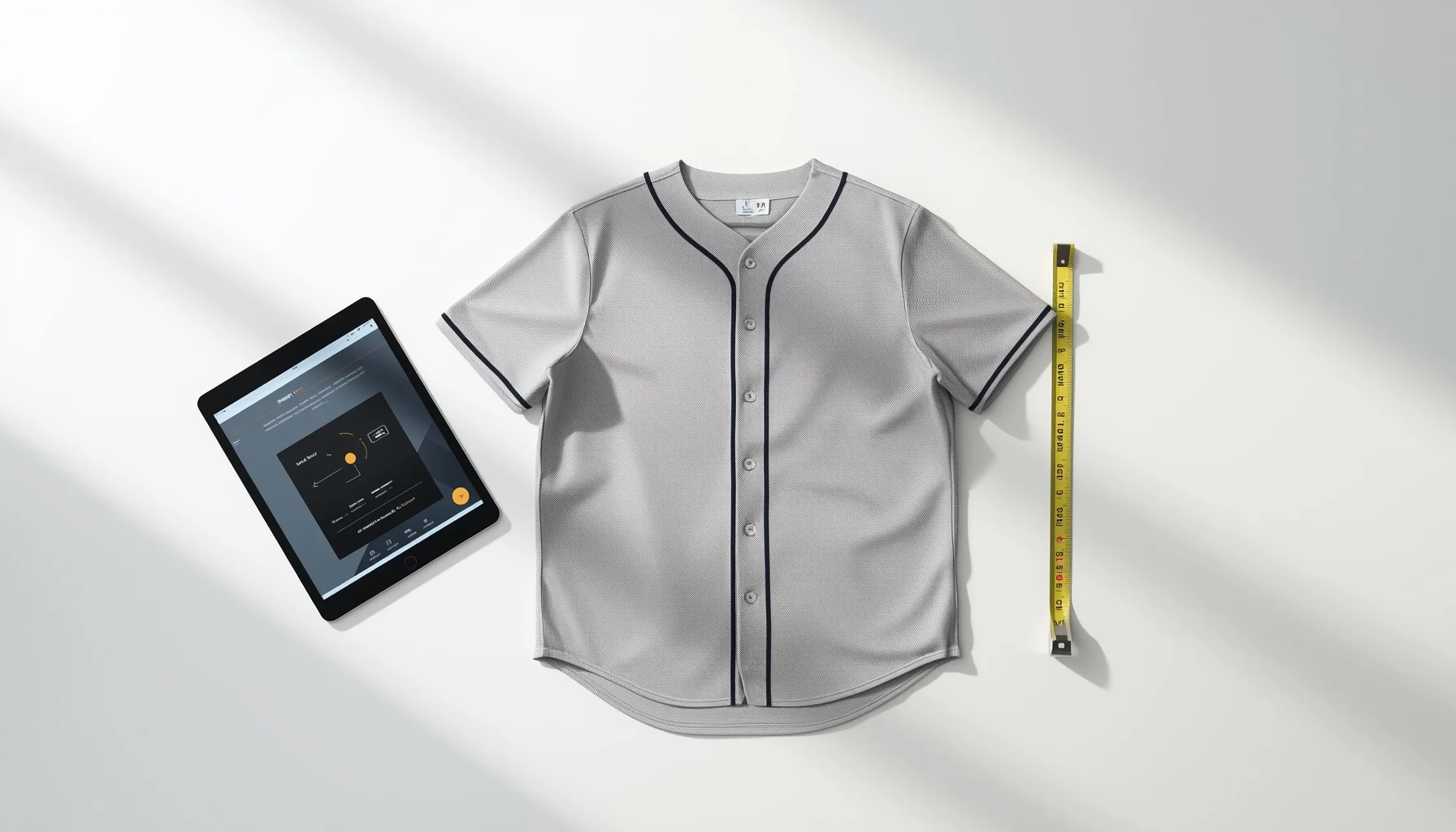 Custom Baseball Jerseys With No Minimum & Free Shipping - Specifications and Order Workflow at a Glance
Customization and fulfillment specifications
The table below summarizes the confirmed order mechanics. It focuses on practical choices and workflow rather than pricing, since the appropriate configuration depends on the team’s design requirements.
| Order element | Available or stated option | Practical consideration |
|---|---|---|
| Order quantity | No minimum order quantity | Suitable for individuals, families, small groups, and replacement orders |
| Personalization | Custom names and numbers | Check spelling, number assignment, and player-to-jersey matching before approval |
| Design choices | Select styles, colors, and finishes through an online design tool | Confirm that the chosen combination reflects the intended team look |
| Finishing | Premium stitched tackle twill or high-quality printing | Choose based on the appearance and finish desired for the design |
| Design review | Free digital proof before production begins | Review the proof carefully and approve only when the details are correct |
| Production | 1–3 business days | Production begins after the proof is approved |
| Total delivery | 6–11 business days | Plan around the total window, not production time alone |
| Standard shipping | Free on orders within the United States | The stated policy covers standard shipping, not a guaranteed arrival date |
Choosing between stitched tackle twill and printing
Legendkits offers two finishing approaches: premium stitched tackle twill and high-quality printing. These are distinct ways to apply the design, so the choice should be made with the intended appearance and use in mind. The available facts do not establish that one method is universally better, more durable, or appropriate for every design; customers should select the option that best fits their preferences and confirm the appearance on the proof.
Tackle twill is a stitched finish, while printing applies the design through a printed method. When deciding, consider how prominent the lettering and numbers should look, how they fit with the overall color scheme, and whether the design proof reflects the intended result. If the design includes multiple colors or detailed elements, inspect the proof rather than assuming the final garment will match a mental picture.
The key comparison is not an unsupported performance claim. It is a practical choice between two stated finishing options, evaluated against the design and the customer’s preferred look.
Reading the timeline correctly
A 1–3 business-day production window is not the same as an arrival estimate. Production is one phase; the stated total delivery window is 6–11 business days. Because the proof must be approved before production begins, the customer’s review is a meaningful checkpoint in the sequence.
Use the total delivery estimate when planning for a game, team photo, or group event. Avoid ordering based only on the fastest production figure, especially when the jerseys must arrive before a fixed date. The timeline is a planning range, not a promise of delivery on a particular day.
For teams, it can help to set an internal deadline for collecting names and numbers, another deadline for proof review, and a final date by which the order should be submitted. That simple schedule reduces last-minute decisions and gives the group a clearer view of what remains to be done.
How to Order: A Practical Step-by-Step Guide
A reliable custom jersey order follows a clear sequence: choose the garment configuration, enter accurate personalization, inspect the digital proof, approve it, and plan around the full delivery window. Treating each stage as a checkpoint helps prevent avoidable corrections.
Step 1: Choose the jersey style, colors, and finish
Begin in the online design tool by selecting the style, colors, and finish. Consider the context in which the jersey will be worn: a youth team may need a consistent group look, while a family order may prioritize matching colors and easy identification. Decide whether stitched tackle twill or high-quality printing better reflects the intended design.
Before entering player information, agree on the main visual choices. For a team, this includes establishing the color combination and keeping the design consistent across orders. For a small group, it may mean deciding which elements should match and which details—such as names or numbers—will differ.
Keep a record of the choices so that each participant’s personalization corresponds to the intended design. This is especially useful if a coach or organizer is placing orders for several people at different times.
Step 2: Enter names and numbers carefully
Add the personalization details after selecting the design. Verify spelling, capitalization, and number assignments before moving on. A roster sheet can serve as a single reference for a team order, while a family or fan group can use a shared list to avoid duplicate or incorrect details.
A practical review checks each entry against the person who will wear the jersey. Do not rely on memory when several players have similar names or when numbers have changed. If the order contains multiple jerseys, review them one by one rather than checking only the first or last entry.
This is a simple but important quality-control measure. The free proof gives customers a chance to inspect the design before production, but accurate source information makes that review more effective.
Step 3: Review and approve the free digital proof
Every order includes a free digital design proof for approval before production starts. Treat it as the final visual checkpoint, not as a formality. Compare the proof against the chosen style, colors, names, and numbers. Check that the details are present and that the design matches what the group expects.
If something is wrong or unclear, resolve it before approval. A proof cannot help prevent a mistake if it is approved without review. For group orders, having one designated reviewer can reduce conflicting feedback; that person can compare the proof with the approved roster and design decisions.
Step 4: Allow time for production and delivery
After the proof is approved, the order moves into production, which takes 1–3 business days. Total delivery is 6–11 business days. Use the total delivery window when working backward from an event date, and avoid treating free standard shipping as an express service.
For teams, the organizer can communicate two dates to participants: the deadline for submitting accurate personalization and the deadline for approving the proof. Clear deadlines help keep the order moving through the stages without relying on last-minute corrections.
Pro Tips, Common Pitfalls, and Planning for Larger Groups
The most effective way to manage a custom jersey order is to make design decisions early, verify every personalized detail, and plan from the total delivery window. For larger organizations, small-batch flexibility is useful, but consistent standards and clear ownership become more important as the number of participants grows.
Common pitfalls and how to avoid them
Using the production window as the arrival date: Production takes 1–3 business days, but total delivery takes 6–11 business days. Plan against the total delivery estimate and leave room for the event schedule.
Approving a proof too quickly: The digital proof is the opportunity to check names, numbers, colors, and the overall design before production. Assign a reviewer and compare the proof with the roster or approved design notes.
Collecting personalization informally: Text messages and separate lists can lead to mismatched numbers or spelling errors. Keep one current roster or order record and use it as the source of truth.
Assuming “no minimum” means no coordination: The policy removes a minimum quantity requirement, but it does not remove the need to make design choices and submit correct information. Even a single jersey benefits from a careful review.
Example planning scenarios
A youth team adding one player can use a no-minimum order to request a jersey without waiting for a larger group purchase. The coach can confirm the team colors and finish, record the player’s name and number, then check the proof against the existing uniform design.
A family organizing a baseball-themed gathering can order only the number of jerseys needed. One person can coordinate the shared style and colors, collect each participant’s personalization, and check the proof before approval. That approach supports a coordinated look without requiring a large order.
An amateur club preparing for a tournament can establish a roster deadline before placing the order. The organizer should account for the 6–11 business-day total delivery estimate and avoid relying on the 1–3 business-day production window as the complete timeline.
Enterprise considerations and a 2026 outlook
For a club, league, or organization managing multiple participants, the central operational challenge is consistency. Establish a standard design, define who can submit changes, keep a verified list of names and numbers, and designate a proof reviewer. These practices make small or individual orders easier to coordinate without assuming that every participant must order at the same time.
In 2026, the practical value of a no-minimum model remains its flexibility for decentralized needs: replacement jerseys, roster changes, small groups, and individual purchases. No verified industry percentage or market benchmark is available in the supplied facts, so a responsible outlook should focus on observable workflow requirements rather than unsupported statistics.
From Legendkits’ perspective, the useful measure of an ordering process is whether the customer can make the required design decisions, review a proof, and understand production and delivery timing. Free U.S. standard shipping and the absence of a minimum quantity address two common planning constraints; careful roster management and proof approval remain the customer’s most important quality controls.
FAQ
Can I order just one custom baseball jersey?
Yes. Legendkits operates with no minimum order quantity, so individuals and groups can order without meeting a bulk threshold. A single jersey can suit a replacement need, a late roster addition, or a personal order. You still need to choose a style, colors, and finish, provide the name and number details, and review the free digital proof before production begins.
Is standard shipping free for every U.S. order?
Free standard shipping is provided on all orders within the United States. The policy refers to standard shipping; it should not be read as a promise of expedited service or a guaranteed arrival date. The stated total delivery time is 6–11 business days, so customers planning around a game or event should allow for that full window.
How long does it take to receive a custom baseball jersey?
Production takes 1–3 business days, and total delivery takes 6–11 business days. These figures describe different parts of the process: production is the manufacturing stage, while total delivery is the broader order-to-arrival estimate. Because a free digital proof must be approved before production starts, review the proof promptly and plan using the total delivery window.
What should I check on the digital design proof?
Check the jersey style, colors, finish, names, and numbers against your approved design and roster. Confirm spelling and number assignments for every personalized jersey, especially when several people are included in an order. The proof is provided for approval before production, so raise any discrepancy before approving it. A careful review is the clearest opportunity to catch design or personalization errors before manufacturing begins.