

Transparent team jersey pricing can help individuals, families, and teams outfit only the people who need gear—without being forced into a bulk purchase. Teams can review a free digital proof, compare stitched and printed finishes, and read Legend Kits reviews before placing an order. Production takes 1–3 business days; total delivery typically takes 6–11 business days.
What “No Minimum Order” Means for Custom Jerseys
 Custom Jerseys With No Minimum Order | Fast Shipping - What No Minimum Order Means for Custom Jerseys
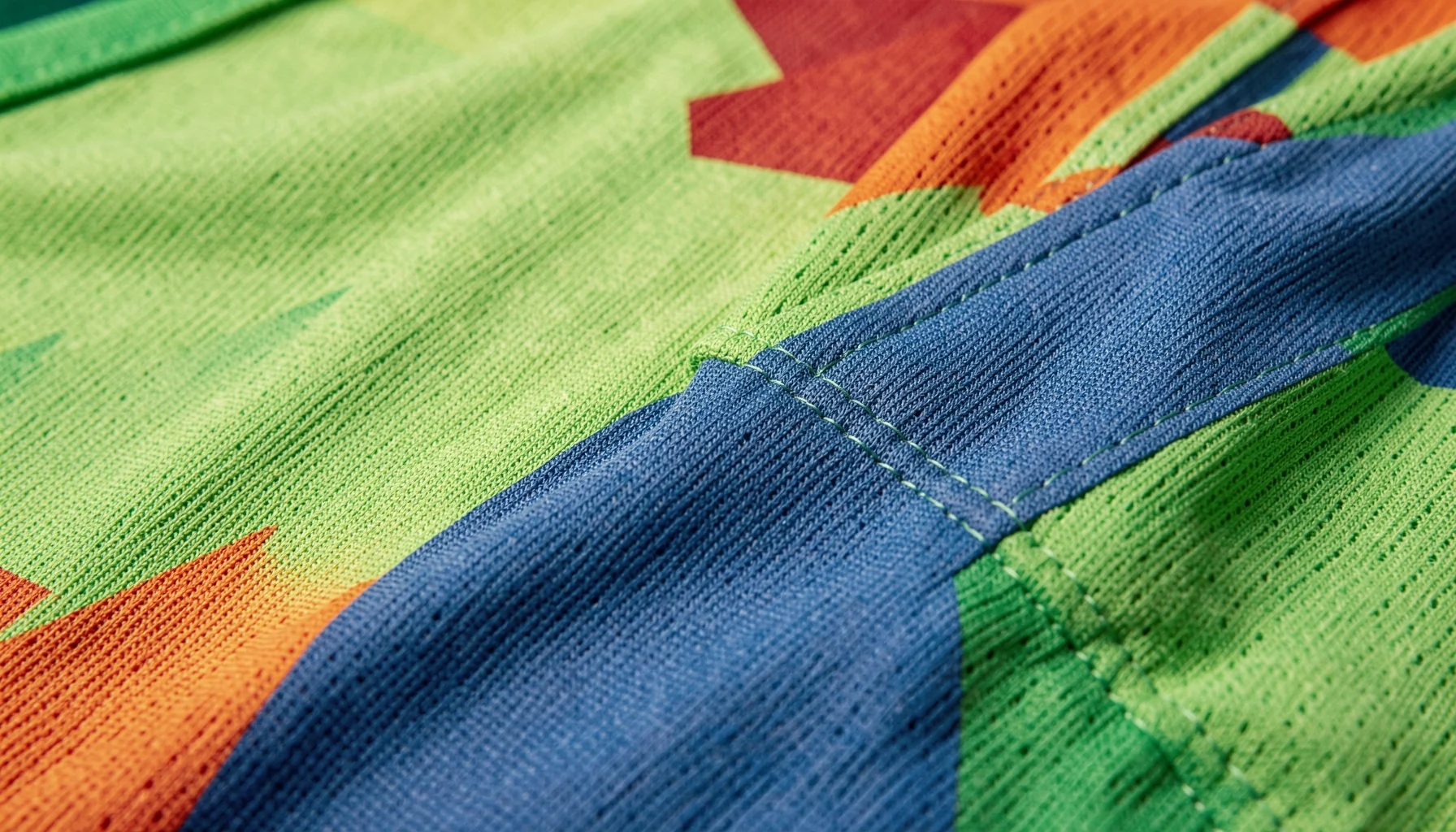
Custom jerseys with no minimum order are personalized athletic garments available without a required bulk quantity, including custom baseball jerseys with no minimum and free shipping. The model supports orders ranging from one replacement jersey to a complete roster, while keeping customization and production centered on the actual needs of the group.
A production model built around individual needs
Traditional uniform purchasing can require a team to buy a fixed quantity, even when it needs only a few additional pieces. A no-minimum approach removes that quantity barrier. An individual player, a family organizing matching jerseys, or a club replacing one damaged top can order what is needed rather than buying surplus inventory.
The phrase describes an ordering and fulfillment model, not a particular fabric, sport, or decoration method. The useful distinction is that quantity does not have to dictate whether personalization is available. Names, numbers, and team colors can be applied to individual garments as well as coordinated group orders.
This flexibility is practical for youth teams with changing rosters, amateur leagues that add players during a season, and fan groups that want a small run. It also helps organizers avoid guessing future sizes or purchasing extras simply to meet a minimum.
The real-world order architecture
A customized jersey order involves several connected decisions: garment selection, design details, decoration, proof approval, production, and delivery. Treating these as distinct stages makes the process easier to manage, particularly when different players need different names, numbers, or sizes.
At Legendkits, customization is supported through user-friendly design tools and professional design assistance. Before production begins, customers receive a free digital design proof to review. That proof is a checkpoint for confirming the design, rather than an assumption that every submitted detail will be interpreted correctly without review.
Once the proof is approved, the order proceeds to production. Customers can choose between premium stitched tackle twill and high-quality printing. Production takes 1–3 business days, with total delivery typically taking 6–11 business days.
Who benefits from ordering without a minimum?
The model is especially useful when the number of required jerseys is small, uncertain, or likely to change. Common examples include:
- A player joining a team after the original uniform order
- A replacement for a lost, damaged, or incorrectly sized jersey
- A family ordering coordinated apparel for a tournament or reunion
- A small adult club or weekend recreational team
- A fan group producing a limited set of personalized jerseys
It can also support larger rosters: “no minimum” does not mean “small orders only.” It means the organizer can plan around actual participation instead of a quantity threshold. For a full team, the same design-review and personalization steps still matter; the difference is that the order size can reflect the roster rather than a supplier’s minimum.
Specifications and Workflow: What to Confirm
 Custom Jerseys With No Minimum Order | Fast Shipping - Specifications and Workflow What to Confirm
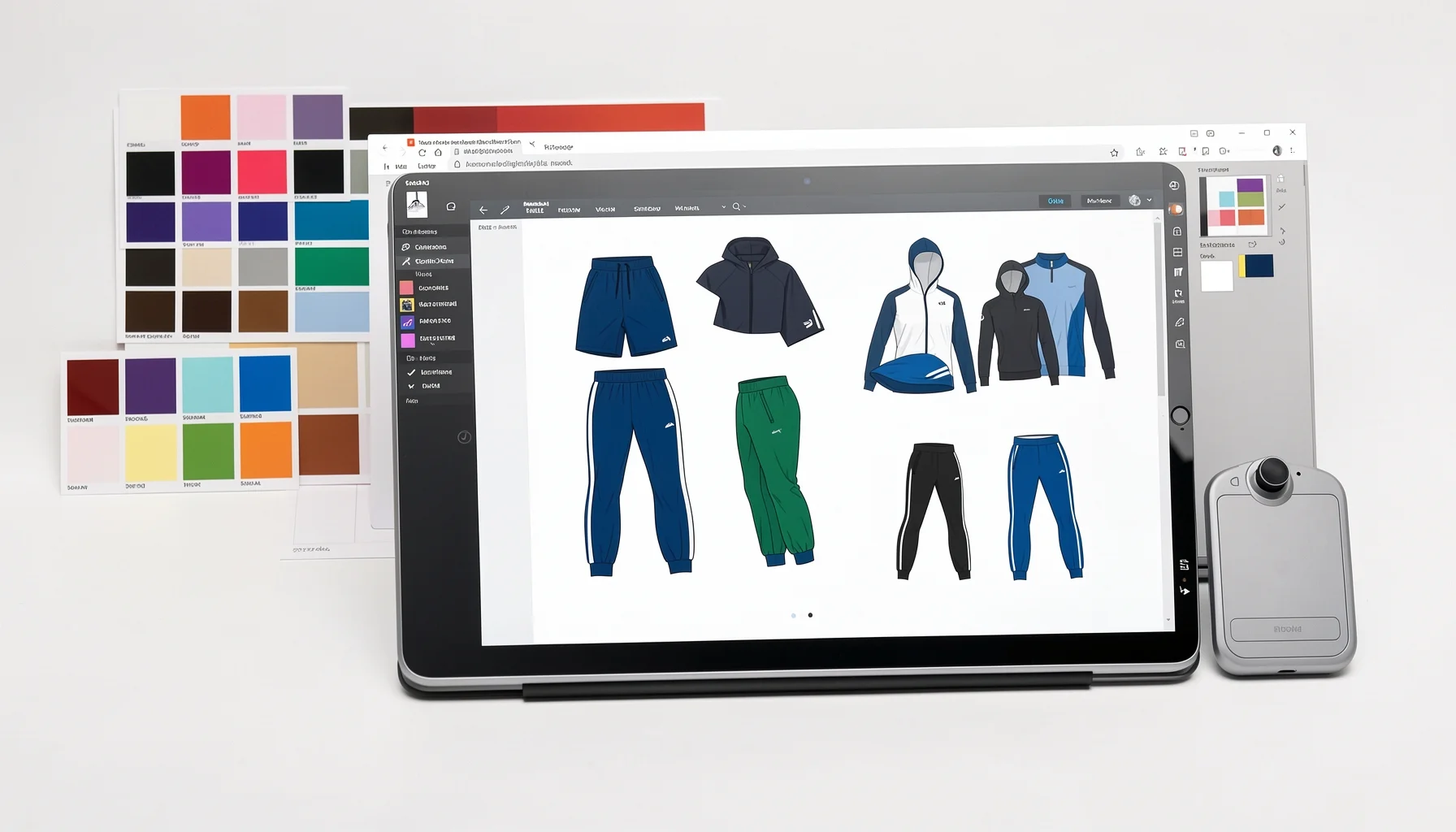
The most reliable way to compare custom-jersey options is to examine personalization, decoration, proofing, production, and delivery as separate specifications. This prevents a fast turnaround or a flexible order size from overshadowing details that determine whether the finished jerseys will suit the team’s needs.
A practical specification matrix
The table below summarizes the key operational details provided for Legendkits and the questions an organizer should resolve during planning. It is a workflow reference, not a price comparison.
| Specification | Legendkits details | What the organizer should confirm |
|---|---|---|
| Minimum quantity | No minimum order quantity required | How many jerseys are needed now, including replacements |
| Personalization | Custom names, numbers, and team colors | Correct spelling, numbering, and color choices for each jersey |
| Design support | User-friendly design tools and professional design assistance | Whether the submitted artwork or layout needs assistance |
| Pre-production review | Free digital design proof before production | That the proof matches the requested names, numbers, colors, and layout |
| Decoration choices | Premium stitched tackle twill or high-quality printing | Which finish best fits the design and intended use |
| Production time | 1–3 business days | When the order is approved and ready to enter production |
| Total delivery time | Typically 6–11 business days | The event date and the time needed for delivery |
| Shipping | Free standard shipping on U.S. orders | Whether the delivery address and required arrival date are correct |
| Sports and use cases | Custom athletic apparel for teams and groups | The sport, garment type, and roster requirements |
The matrix distinguishes production time from total delivery time. These are not interchangeable: a short production window does not mean the parcel arrives within that same number of business days. For event planning, use the stated total delivery range and leave room for proof review and any corrections before approval.
Choosing a finish for the design
Stitched tackle twill and printing are different finishing approaches, so the decision should reflect the intended appearance and design requirements. The right choice depends on the artwork and the team’s priorities; the available facts do not establish that one finish is universally better or more durable in every use case.
Before deciding, consider:
- Whether the design relies on a stitched, layered appearance or printed detail
- How names and numbers should appear alongside the team identity
- Whether the same finish should be used consistently across the roster
- Whether the digital proof accurately represents the requested design
For a fuller explanation of the trade-offs, organizers can review this guide to stitched versus printed jerseys for sports teams. The key is to make the finish decision before approving the proof, so the approved design reflects the intended production approach.
Comparing workflows without confusing features
When evaluating providers, compare the actual workflow rather than relying on broad labels such as “custom” or “fast.” Other providers may offer different decoration methods; for example, some market options include sublimation, DTF, or embroidery. Those methods are not interchangeable descriptions of Legendkits’ stated choices, which are stitched tackle twill or high-quality printing.
A useful comparison asks:
- Can the order be placed without a quantity minimum?
- Are names, numbers, and team colors supported?
- Is there a design proof to approve before production?
- Which decoration methods are actually offered?
- What are the stated production and total delivery windows?
- What shipping terms apply to the delivery destination?
Answers should be verified against the provider’s current product information before an order is placed. This is especially important when a deadline is fixed or a group requires consistent treatment across multiple garments.
How to Plan and Place an Order
A smooth jersey order starts with a complete roster and a realistic delivery deadline. Organizers can reduce avoidable corrections by collecting personalization details in one place, reviewing the design proof carefully, and treating approval as the final quality-control checkpoint before production.
Step 1: Define the order and collect roster details
Start by identifying the use case: a single replacement, a small group, or a full team order. Then collect the information that affects each garment. At minimum, the organizer should maintain a clear list of the required names and numbers and confirm the team colors and quantities.
For a group order, use one master roster rather than separate messages or informal notes. A simple checklist can include:
- Player or recipient name
- Jersey number
- Required size, where applicable during the ordering process
- Team color choices
- Whether the garment is new or a replacement
The grounded product information specifies names, numbers, and team colors as customization options; it does not state a particular size range or sizing interface. Confirm sizing details through the ordering process rather than assuming a range. A roster also makes it easier to spot duplicate numbers, spelling differences, and missing entries before design work is finalized.
Step 2: Build the design and select a finish
Use the available design tools to establish the jersey’s overall look, or seek professional design assistance if the layout needs refinement. Keep the team identity legible and consistent: color choices, name placement, and number treatment should work together rather than compete for attention.
Choose between stitched tackle twill and high-quality printing based on the intended design and appearance. Do not treat the finish as a minor afterthought. If the team expects a particular look, communicate that preference before the proof is prepared so the visual review can reflect the chosen approach.
For a small batch, consistency still matters. A single player’s replacement jersey should match the existing team identity as closely as the available design choices allow. For a larger order, agree on one approved design standard before applying individual names and numbers across the roster.
Step 3: Review and approve the digital proof
The digital proof is the most important pre-production checkpoint. Review the entire design, not just the overall impression. Check every personalized field against the roster, including spelling, number assignment, color choices, and the placement of design elements.
A practical proof review can follow this sequence:
- Compare each name and number with the master roster.
- Confirm that the intended team colors are represented.
- Check the chosen finish and overall layout.
- Ask another organizer to independently verify the details.
- Approve only when the proof matches the intended order.
Legendkits provides a free digital design proof before production begins. Use that opportunity to catch errors before they move into manufacturing. If a detail is wrong or unclear, request clarification or correction before approval rather than relying on an assumption that it will be adjusted later.
Step 4: Plan backward from the delivery date
Legendkits states that production takes 1–3 business days and total delivery typically takes 6–11 business days. Use the total delivery range when planning for a game, tournament, team photo, or event; production time alone is not a delivery promise.
Because proof review occurs before production, the organizer should also allow time to check and approve the design. Keep the delivery address accurate, and communicate a fixed event date early in the planning process. Free standard shipping applies to orders within the United States, but organizers should still confirm the relevant shipping details for their destination and schedule.
Quality Control, Pitfalls, and Planning at Scale
The most common preventable jersey-order problems come from incomplete roster information, rushed proof approval, and unrealistic delivery planning. A simple review process can improve accuracy for a one-jersey replacement just as much as for a complete team order.
Common pitfalls and practical fixes
Names or numbers do not match the roster. Centralize personalization details in one approved list. Ask a second person to check the proof against that list rather than verifying from memory.
Team colors are described inconsistently. Agree on the intended color choices before design begins. If a group uses informal names for colors, clarify the selection in the design process and confirm what appears on the proof.
The finish is chosen too late. Decide whether stitched tackle twill or printing better fits the design before the final proof review. A design should be assessed in the context of its intended finish, not as an abstract image.
The event date is confused with the production window. Production takes 1–3 business days, while total delivery typically takes 6–11 business days. Plan against the full delivery range, and avoid assuming that production speed alone determines arrival.
A replacement jersey is ordered without checking consistency. Compare the replacement’s personalization and design with the team’s existing standard. Confirm details with the organizer responsible for the original uniform design whenever possible.
Examples for different team situations
A youth team adds a player mid-season and needs one jersey. A no-minimum model allows the family or team organizer to order the required piece without ordering a surplus batch. The priority is to match the established team colors and number system, then verify the personalized proof carefully.
An adult recreational league replaces two damaged jerseys. The organizer can focus the order on those replacements rather than rebuilding the full uniform set. A roster check helps prevent duplicate numbers or inconsistent name spelling, while the proof offers a chance to compare the replacement design against the team’s intended look.
A fan group wants a small run for a shared event. The group may have a different design objective from a competitive team, but the operational steps remain similar: gather names and numbers if needed, establish colors, select a finish, approve the proof, and plan around the total delivery window.
Scaling from a few garments to a full roster
No-minimum ordering can simplify purchasing, but a larger order still benefits from disciplined coordination. Assign one person to manage the approved design and roster. Set a clear cutoff for collecting personalization details, then review the full order as a set rather than treating each garment as an isolated request.
For larger groups, establish a version-controlled master list. Mark changes explicitly, such as a corrected spelling or a revised number, and make sure the final proof reflects the approved version. This reduces the risk of conflicting instructions reaching the design stage.
Legendkits’ perspective is that small-batch fulfillment works best when flexible quantity is paired with controlled design approval. The absence of a minimum removes a purchasing constraint; it does not remove the need for accurate information, consistent decisions, or a realistic schedule.
Enterprise Considerations and FAQ
In 2026, teams and organizations should assess custom apparel by how well the ordering process supports roster changes, design control, and delivery planning—not by quantity flexibility alone. For Legendkits, the central strategic consideration is connecting on-demand production with clear proof approval and practical fulfillment expectations.
Strategic considerations for 2026
Organizations should treat a jersey program as a repeatable workflow rather than a one-time design task. That means maintaining a consistent team identity, documenting personalization standards, and assigning responsibility for final approval. These practices are useful whether the organization orders one jersey or outfits several teams.
For schools, clubs, and amateur leagues, a no-minimum model can help address roster movement and replacement needs without requiring organizers to forecast every future garment. Families and fan groups can also order small quantities when a large production run would be impractical. The model is therefore suited to variable demand, but it should not be interpreted as a guarantee of identical outcomes across different designs or use cases.
A 2026 planning checklist should include:
- A defined owner for artwork and roster accuracy
- A consistent process for collecting names and numbers
- A selected decoration method before proof approval
- A documented approval step for every order
- A delivery plan based on the full stated window
These are operational recommendations, not industry-wide statistical benchmarks. No percentage-based performance claims are necessary to assess whether the process fits a team: the relevant evidence is the provider’s stated capabilities, the order’s approved proof, and the schedule available for the specific event.
Frequently asked questions
Can I order just one custom jersey?
Yes. “No minimum order” means a customer can place an order without meeting a bulk quantity threshold, so an individual replacement or single personalized jersey can fit the model. Legendkits supports custom names, numbers, and team colors, whether an order is for one garment or a larger group. Confirm the design details and review the digital proof carefully before production begins, especially when the jersey needs to match an existing team uniform.
What customization and finishing options are available?
Legendkits supports personalization with custom names, numbers, and team colors. Customers can use design tools and professional design assistance, then review a free digital proof before production. The stated finishing choices are premium stitched tackle twill or high-quality printing. Consider the intended appearance and design when selecting a finish, and make sure the proof represents the desired layout before approving it. The available facts do not establish that one finish is best for every sport or design.
How long does production and delivery take?
Legendkits states that production is completed in 1–3 business days, while total delivery typically takes 6–11 business days. These are different timeframes: production is one part of the process, and total delivery includes the broader fulfillment timeline. Plan around the total delivery estimate for a game or event, and allow time to review and approve the digital proof before production. Free standard shipping is available on orders within the United States.
What should I check before approving the design proof?
Compare the proof with the final roster and confirm every name, number, and team color. Check that the overall design reflects the intended layout and the selected finish—stitched tackle twill or printing. For a group order, ask a second organizer to review the details independently. Approval is the key checkpoint before production begins, so raise any discrepancy or uncertainty before approving rather than assuming it will be corrected later.