

Custom team jerseys for corporate events turn a company gathering into a coordinated, recognizable team experience. They can carry a company logo, event identity, employee names and numbers, and sponsor marks while using performance fabrics suited to the activity. A clear design and sizing workflow helps organizers prepare for tournaments, charity runs, retreats, and corporate gifts, while this guide on organizing a team jersey order can help keep key production details on track.
1. What Corporate Event Jerseys Are—and How They Work
Custom team jerseys for corporate events are personalized athletic garments designed around a company, event, or campaign identity. Their practical architecture combines apparel selection, brand assets, decoration, fit and sizing, and order fulfillment into one coordinated process.
From sportswear to shared company identity
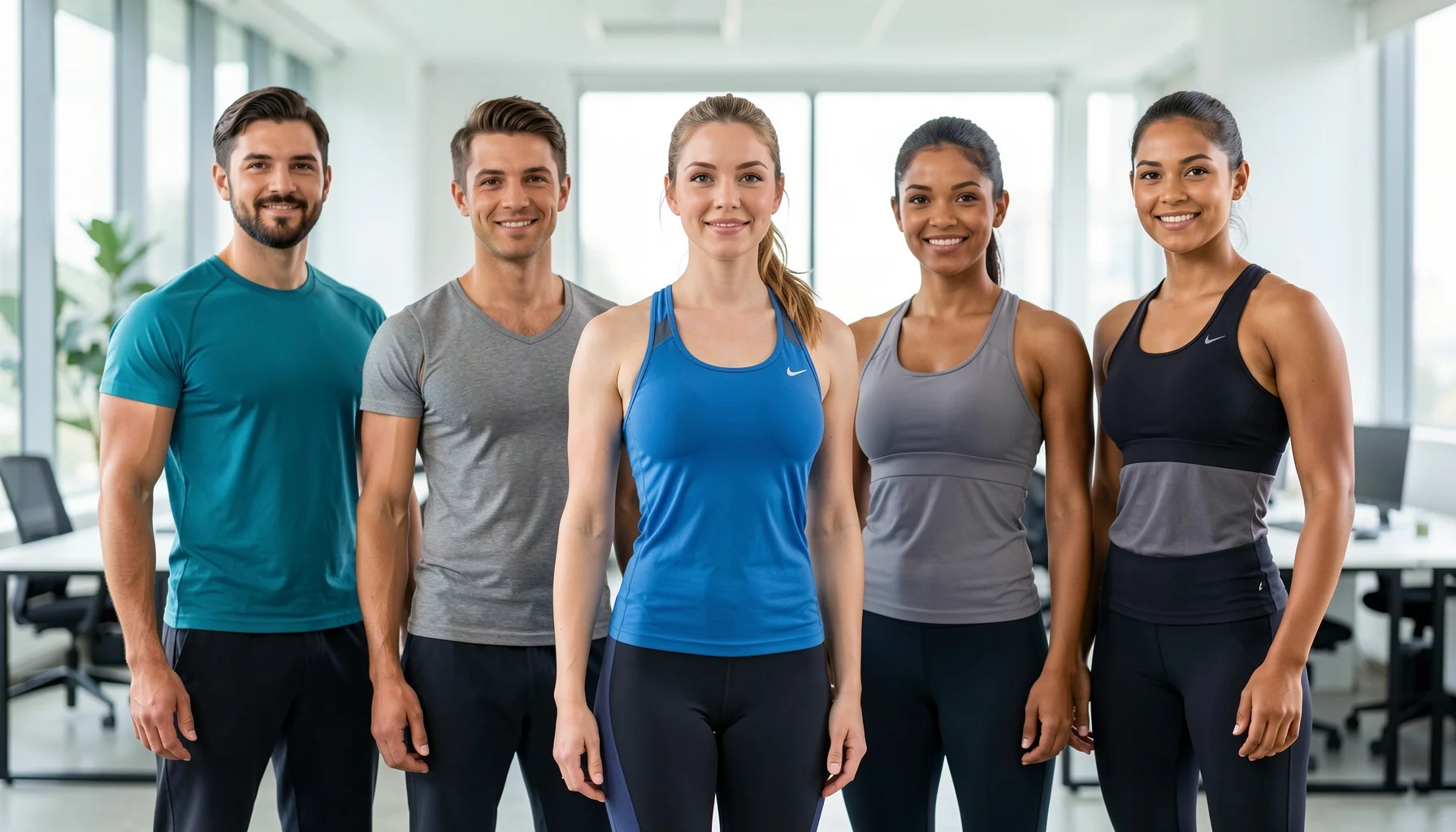
A corporate jersey does more than identify who is playing. It can help employees recognize teams, bring departments together, and give event photographs a consistent visual identity. At a company tournament, for example, custom corporate softball tournament jerseys can distinguish departments; at a charity run, a shared design can connect participants to the company’s cause.
The garment usually combines several design elements:
- Company logo on the chest or another visible location.
- Event name or campaign identity on the back or front.
- Employee names and numbers for individual recognition.
- Sponsor logos on sleeves or other agreed placements.
- Team colors that reflect brand guidelines or event themes.
These components should be planned as a system. A logo may need to remain legible against the jersey’s base color, while names and numbers need enough contrast to be easy to read. Placement also matters: adding more marks does not necessarily make a jersey more effective if the result feels crowded.
The production architecture behind a finished jersey
The process typically starts with selecting a jersey style and submitting logos or brand guidance. A supplier then prepares a digital proof so the organizer can review the design before production. After approval, the order is configured by size and personalization details, manufactured, and prepared for distribution.
When comparing stitched and printed jersey finishes, consider how decoration methods affect both appearance and suitability:
- Full-color sublimation dyes the design into the fabric, allowing extensive color options and detailed designs.
- Screen printing supports up to eight ink colors and is commonly suited to larger bulk orders.
- Stitched tackle twill creates a raised, durable finish associated with a traditional athletic look.
- Digital printing accommodates smaller batches or designs with detailed artwork.
Legendkits’ perspective is that good planning begins with the event’s real needs: who will wear the jerseys, what the garment must communicate, and how participants will receive it. For ideas specific to retreats and company gatherings, see this guide to custom team jerseys for corporate events and retreats.
2. Specifications, Decoration, and Order Mechanics
The right specification depends on the activity, visual identity, quantity, and distribution plan. Before requesting production, organizers should distinguish design requirements from operational requirements: what the jersey needs to look like, how it must perform, and how it will reach each participant.
 Custom Team Jerseys for Corporate Events & Retreats - 1. What Corporate Event Jerseys Are—and How They Work
Compare the main production choices
| Specification | Options or typical details | Practical consideration |
|---|---|---|
| Decoration method | Full-color sublimation; screen printing; stitched tackle twill; digital printing | Match the method to artwork complexity, desired finish, and batch size. |
| Branding placement | Chest logo; event name on the back; sponsor marks on sleeves | Agree on locations early and check visibility against the jersey’s base color. |
| Fabric features | Moisture-wicking, breathable blends; UPF 50 options for outdoor events | Choose according to activity and exposure, not appearance alone. |
| Sizing | XS–5XL; unisex and women’s-specific cuts; youth sizes may be available | Collect sizes by cut and size, rather than relying on a single general size list. |
| Personalization | Individual names and numbers | Confirm spelling, numbering rules, and a final participant list before production. |
| Design approval | Digital proof reviewed before production | Check artwork, text, colors, placements, and personalization on the proof. |
| Standard timing | Typically 15–18 business days | Build in time for design review, list corrections, and distribution. |
| Rush timing | Typically 7–10 business days; may involve an additional per-jersey charge | Confirm feasibility and required approvals with the supplier before relying on a rush schedule. |
| Super-rush timing | Typically 5–7 business days for simple designs; may involve an additional per-jersey charge | Treat this as a constrained option, not a substitute for a complete order plan. |
| Fulfillment | Individual poly-bagging with size stickers or bulk cartons organized by size | Choose based on whether jerseys will be handed out individually or sorted at the venue. |
| Corporate documentation | Commercial invoices, VAT/GST documentation, and purchase order processing may be available | Verify the exact documentation and purchasing process required by the organization. |
How to choose for the event, not just the artwork
Begin with the garment’s purpose. A charity run held outdoors may call for breathable, moisture-wicking fabric and UPF 50 protection. A company tournament may prioritize recognizable team colors, clear numbers, and a finish that suits repeated athletic use. A retreat gift may call for a more premium visual treatment, such as stitched tackle twill or presentation packaging, if available from the provider.
Then evaluate artwork. A complex, multicolor design may suit sublimation; a high-detail graphic or smaller batch may point toward digital printing. Screen printing can be a practical choice for larger quantities with a limited palette, while tackle twill offers a distinct stitched appearance. These are selection cues, not universal rules: artwork, garment, quantity, and supplier capabilities all affect the final decision.
3. A Practical Workflow for Planning and Ordering
A reliable order workflow makes the design, participant data, approval, production, and distribution stages visible to everyone involved. The most effective safeguard is to assign an owner to each stage and set a deadline before the event date.
 Custom Team Jerseys for Corporate Events & Retreats - 2. Specifications, Decoration, and Order Mechanics
Step-by-step implementation
Step 1: Define the event and its users. Identify whether the jerseys are for a tournament, charity run, retreat activity, campaign, or gift. Estimate participants, note whether family members or youth will take part, and decide whether everyone needs the same style.
Step 2: Set the visual brief. Gather the company logo, approved colors, event title, sponsor marks, and any brand guidance. Specify what should appear on the chest, back, and sleeves. Decide whether individual names and numbers are required.
Step 3: Choose a jersey and decoration approach. Consider the activity, fabric needs, artwork complexity, quantity, and desired finish. Ask the supplier to confirm that the chosen method supports the artwork and garment combination.
Step 4: Build the size and personalization list. Record each participant’s name, selected cut, size, and number in a consistent format. Check the list for duplicates, missing entries, spelling, and size-category mix-ups before submitting it.
Step 5: Review the digital proof. Compare the proof against the original brief and brand assets. Verify logo proportions, color treatment, spelling, number placement, sponsor marks, and garment color. Obtain approval from the designated decision-maker before production starts.
Step 6: Confirm timing, documentation, and packing. Work backward from the event date. Standard production is typically 15–18 business days, while rush or super-rush options may be available with additional charges and conditions. Confirm the required invoice or purchase-order process and decide whether orders should be individually bagged or grouped by size.
Step 7: Reconcile delivery. On receipt, compare quantities and size labels with the final order list. Keep a distribution roster so organizers can hand out items efficiently and identify any discrepancy promptly.
Make sizing and distribution part of the design plan
Sizing is not a last-minute administrative detail. A mixed group may need XS–5XL coverage, unisex and women’s-specific cuts, or youth sizing for a family-inclusive event. Communicate available options clearly and collect responses in a format that distinguishes garment cut from size.
Packing decisions affect event-day logistics. Individually bagged jerseys with size stickers can simplify handout to named participants. Bulk cartons organized by size may work better when a coordinator will sort garments at the venue. Whichever method is selected, match the labels to the participant list and designate a distribution lead.
4. Design Tips, Common Pitfalls, and Use-Case Examples
Strong corporate jerseys are legible, consistent, and suited to the event. Most avoidable problems arise not from complex production issues but from incomplete briefs, rushed approvals, unverified participant data, or designs that prioritize decoration over readability.
Prevent common errors before production
Unclear or outdated brand files: Supply the correct logo files and current color guidance. If color matching matters, state that requirement and review the digital proof carefully; do not assume that a screen preview alone guarantees an exact result.
Crowded artwork: Prioritize the company identity and event information. Place sponsor marks consistently and preserve enough contrast for names and numbers to remain readable. A proof should be reviewed at the garment level, not only as a flat graphic.
Late size changes: Set a firm deadline for participant information and check the compiled list before it goes to production. Late edits can disrupt schedules, especially when names and numbers are individually assigned.
Unrealistic timing: Count backward from the event, leaving time for design review and corrections. Rush production may be available, but it should be confirmed rather than assumed. Keep the artwork and participant list ready before requesting an accelerated schedule.
Weak handout planning: Select individual bagging or size-organized cartons according to the distribution setting. A team arriving at a registration desk needs a different process from a coordinator delivering boxes to department leads.
Match the jersey plan to the event
For a company tournament, department colors and readable numbers can help participants and spectators identify teams. Consider a consistent chest logo, with team names or event details placed where they remain visible during play.
For a charity run, prioritize breathable fabric and consider UPF 50 protection for an outdoor event. Keep the cause or campaign message legible, and avoid placing important information where it may be obscured during activity.
For a retreat or executive gift, the garment can be presented as part of a broader experience. A premium finish or gift-box presentation may suit a gifting context, while employee names can make the item feel individually considered. An order intended as a gift still needs careful attention to sizing, proof approval, and delivery timing.
For a family-inclusive event, confirm the availability of youth sizes alongside adult options. Plan the size list and packing approach to make distribution straightforward for families rather than assuming a single adult sizing range.
Organizations combining jerseys with items such as shorts, caps, or bags may find that coordinated bundling can yield 15–20% cost savings compared with procuring items individually, according to the supplied industry information. Treat that figure as a planning reference, not a guarantee; actual savings depend on the products and order.
5. Enterprise Considerations and the 2026 Outlook
For larger organizations, jersey procurement is a small supply-chain project: it involves brand control, approvals, participant data, documentation, deadlines, and delivery. In 2026, the most useful strategic improvement is not a more elaborate graphic but a repeatable process that makes annual and multi-team events easier to manage.
Governance for multi-team and recurring orders
Enterprise organizers should identify who owns the brand assets, who approves the artwork, and who validates names, numbers, and sizes. A central coordinator can consolidate departmental lists and prevent conflicting versions from reaching production. Keep a dated final file and approval record so the supplier and internal stakeholders work from the same specification.
Corporate accounting and procurement requirements should be raised early. Confirm whether the supplier can support the needed commercial invoice, VAT/GST documentation, or official purchase-order process. Some providers offer Net 30 or Net 60 terms, but terms vary and should be verified directly rather than assumed.
For recurring events, ask whether approved logos and color specifications can be retained for future reorders, and confirm the retention period with the supplier. The supplied industry reference reports that professional suppliers typically store these assets for 2–5 years; this is a benchmark, not a promise applicable to every provider. A saved design can streamline a repeat event, but participant sizes and names still need fresh validation.
Corporate gifting, scale, and smaller groups
Corporate gifting expands the use of jerseys beyond participants in a game. A premium jersey can serve as a retreat keepsake, an executive gift, or a recognition item connected to a company event. To make that approach feel considered rather than generic, align the garment, personalization, packaging, and message with the recipient and occasion.
High-volume programs benefit from consistent templates and centralized specifications. Smaller events may need the opposite: flexibility when headcount changes or a team does not meet traditional bulk thresholds. Legendkits specializes in small-batch and individual custom apparel, with no minimum order, a free digital proof before production, and production typically completed in 1–3 business days; total delivery is typically 6–11 business days. Those timings are product-service specifications, not a guarantee for every order or destination.
From Legendkits’ perspective, the practical 2026 outlook is a balance: standardize the elements that should remain consistent—logo use, color rules, approval ownership—and keep the elements that change, such as names, sizes, and event details, easy to update. This reduces repeat work while preserving the personal character that makes a team jersey valuable.
FAQ
What information should a company provide before ordering custom event jerseys?
Prepare the company logo, approved colors or brand guidelines, event name, sponsor marks, preferred placements, garment preferences, and estimated quantities. If jerseys will include individual names or numbers, provide a checked participant list with each person’s cut and size. Decide who can approve the digital proof and confirm the event deadline, fulfillment preference, and any purchase-order or invoice requirements before production begins.
Which decoration method is best for corporate team jerseys?
There is no single best method for every design. Sublimation supports full-color artwork integrated into the fabric; screen printing supports up to eight ink colors and is suited to many bulk applications; digital printing can accommodate detailed designs or smaller batches; and stitched tackle twill provides a raised, durable athletic finish. Compare the artwork, garment, quantity, and intended appearance, then confirm suitability with the supplier.
How early should organizers place a jersey order?
Use the event date to build a backward schedule that includes participant data collection, design review, corrections, production, and distribution. Typical standard production is 15–18 business days. Rush production may take 7–10 business days, and super-rush production may take 5–7 business days for simple designs, often with additional charges. Confirm current feasibility and delivery timing with the supplier before committing to an event schedule.
Can a company order jerseys for a small event or a few gift recipients?
Yes, but minimums and production options depend on the provider. The supplied Legendkits specifications include no-minimum ordering, a free digital proof, production typically completed in 1–3 business days, and total delivery typically ranging from 6–11 business days. A small order can still use names, numbers, team colors, and branding, though the available methods and timelines should be confirmed for the specific design and order.