

For stitched vs printed jerseys for sports, the right finish depends on the look, design, and practical needs of your team. Stitched tackle twill adds raised fabric lettering and numbers for a textured, traditional appearance, and teams on a budget can compare custom football jerseys with stitched numbers under $50. High-quality printing creates a smooth, lightweight finish that can accommodate complex, multicolor designs, making it a useful option when you design your own baseball jersey online. Both are made for athletic use; the best choice is the one that fits your uniform goals.
How stitched and printed jersey finishes work
Stitched and printed jerseys differ in how names, numbers, and other graphics are applied. Tackle twill uses sewn-on fabric pieces for a raised finish, while printing applies graphics directly using heat-transfer or direct-to-garment processes.
 Stitched vs Printed Jerseys for Sports: Choosing a Finish - How stitched and printed jersey finishes work
What is a stitched tackle-twill jersey?
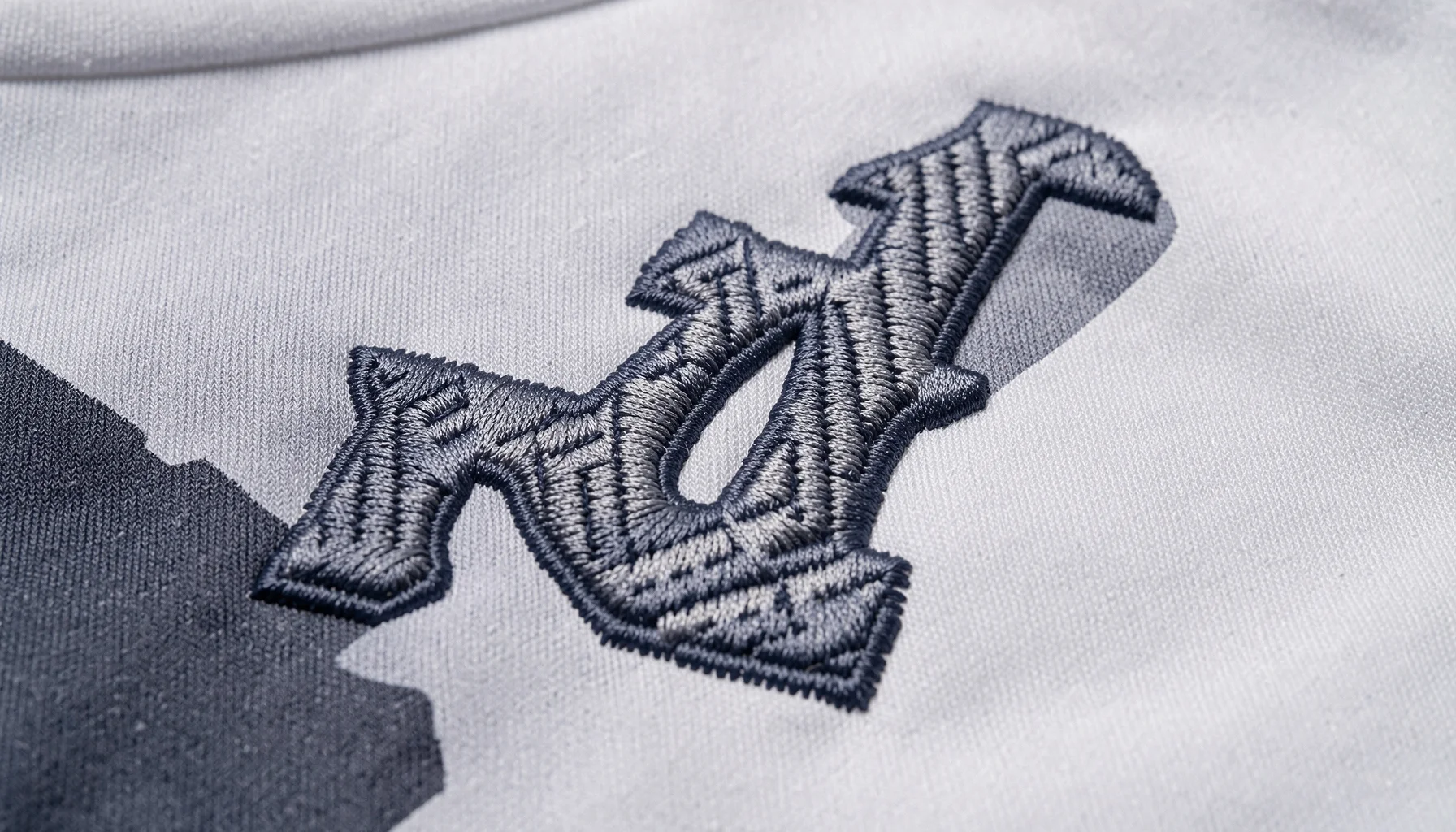
With stitched tackle twill, letters and numbers are cut from fabric and sewn onto the jersey. The finished graphics sit above the garment surface, creating a visible edge and tactile depth. This construction is widely associated with traditional, professional-style uniforms.
The method is especially suited to designs that rely on clearly defined names and numbers. The added material and stitching create a more substantial appearance than a smooth printed graphic. That dimensional effect is a key reason teams choose stitched finishes when they want a classic uniform identity.
Tackle twill is not simply a printed design with an outline: the lettering and numbers are separate fabric pieces attached to the jersey. Placement, spelling, numbering, and color therefore need careful review before production.
What is a printed jersey?
A printed jersey uses a heat-transfer or direct-to-garment process to apply names, numbers, and other graphics. The result is smooth and lightweight, without the raised fabric pieces of tackle twill.
Printing can be a practical option for complex, multicolor artwork because the design is applied as a graphic rather than assembled from individual fabric letters. It also offers flexibility when a uniform’s visual identity depends on more than simple lettering and numbering.
Both stitched and printed finishes are engineered for athletic performance. Their main differences are appearance, texture, and design flexibility—not whether a team can personalize the jersey. For more detail on the methods in a team setting, see this guide to stitched vs. printed jerseys for sports teams.
What does “authentic” mean when comparing finishes?
“Authentic” often refers to a traditional uniform aesthetic: raised fabric letters and numbers with visible stitching. Tackle twill is commonly viewed as the authentic standard for visual depth and longevity, while printing offers a cleaner, flatter appearance.
That distinction describes the look and construction, not a universal guarantee that one method will last longer in every situation. Garment use, care, design, and production quality all matter. Teams should compare the physical finish they want rather than treating “authentic” or “modern” as a measure of overall quality.
A technical comparison of stitched and printed finishes
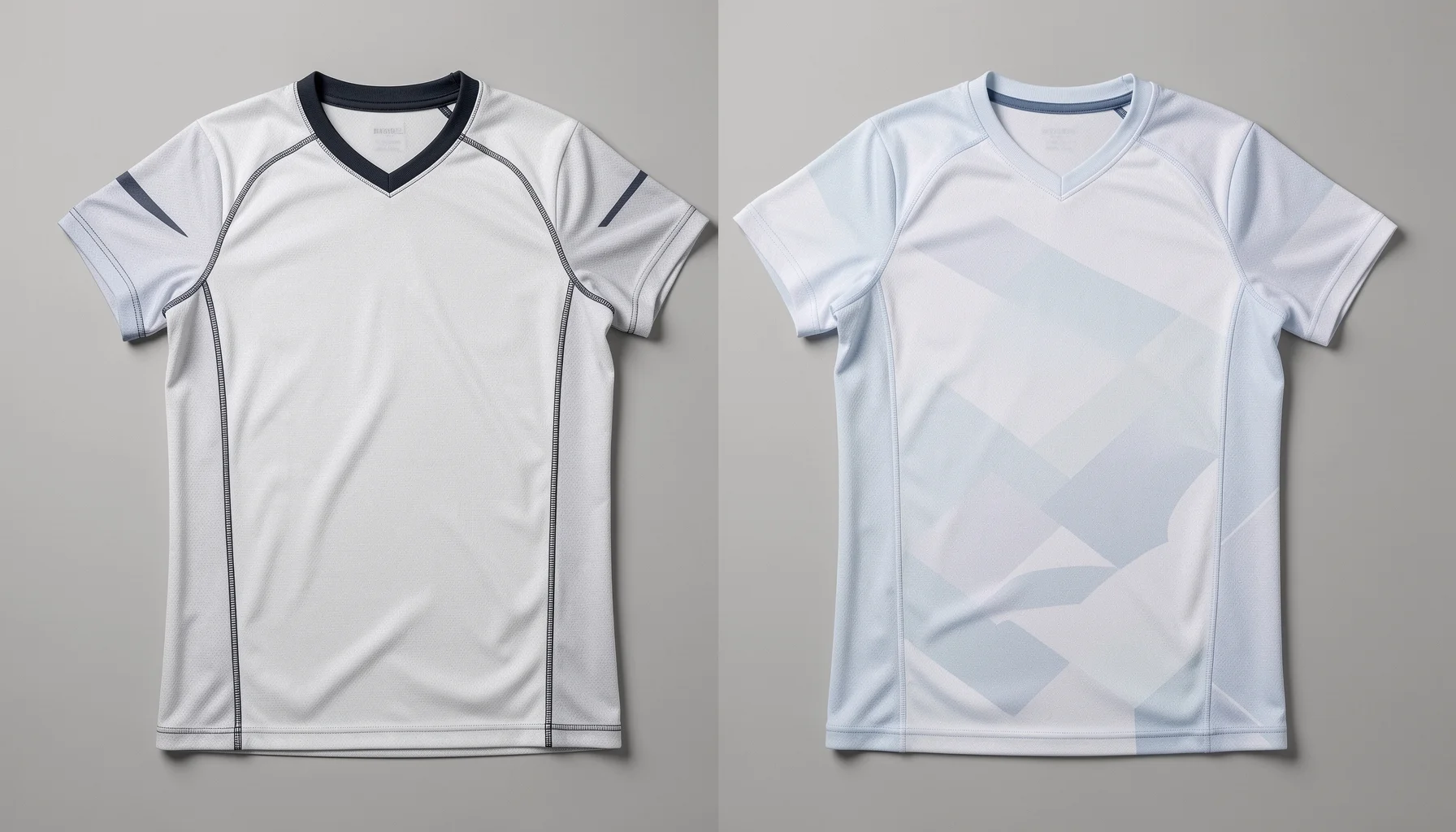
Tackle twill builds graphics from sewn fabric pieces, whereas printing applies graphics to the jersey surface. The table compares their construction and practical implications so teams can assess the finish against their design and uniform requirements.
 Stitched vs Printed Jerseys for Sports: Choosing a Finish - A technical comparison of stitched and printed finishes
Finish specifications at a glance
| Specification | Stitched tackle twill | High-quality printing |
|---|---|---|
| Application method | Individual fabric letters and numbers are sewn onto the jersey | Graphics are applied using heat-transfer or direct-to-garment printing |
| Surface feel | Raised and textured | Smooth and lightweight |
| Visual character | Dimensional, traditional, professional-style appearance | Clean, flat appearance |
| Design suitability | Strong fit for defined names and numbers | Flexible for complex, multicolor designs |
| Typical selection priority | Texture, depth, and a classic uniform look | Lightweight feel and graphic flexibility |
| Pre-production check | Confirm text, number, color, and placement in the proof | Confirm text, number, color, and placement in the proof |
| Performance context | Engineered for athletic performance | Engineered for athletic performance |
| Durability perspective | Traditionally viewed as an authentic standard for longevity and visual depth | Durable, high-quality printing; actual expectations depend on use and care |
The table highlights broad construction differences, not a guarantee that every design will be available in every finish. Confirm the intended design and finishing method during the ordering process and review the digital proof before approving production.
How should teams interpret durability?
Tackle twill is traditionally associated with longevity and visual depth. The sewn fabric components create a more substantial graphic, which can suit teams looking for a uniform with a classic, dimensional appearance. High-quality printing is also designed for athletic use, but it has a different construction and feel.
It is more useful to compare the finish you want than to assume that one option is indestructible. Neither method removes the need to follow garment-care instructions. Teams should also consider how frequently uniforms will be worn, how they will be stored, and whether the design relies on texture or on a broad range of colors.
What should a team compare before deciding?
Start with three questions:
- What should the uniform look and feel like? Choose twill for raised texture; choose printing for a smooth finish.
- How complex is the artwork? Printing is often more flexible for multicolor designs.
- What needs to be checked before production? For either method, inspect every name, number, color, and placement detail in the proof.
If the finish is a close call, compare the design in its final layout rather than choosing from a method name alone. A proof makes it easier to judge how the lettering and colors work together on the selected jersey style.
How to choose and order the right jersey finish
Choosing a finish is a design decision as much as a production decision. A reliable workflow moves from jersey style and layout to personalization, proof approval, manufacturing, and fulfillment, giving the team a chance to verify details before production begins.
Step 1: Define the uniform’s purpose and look
Identify who will wear the jerseys and what the design needs to communicate. Youth teams and amateur leagues may want a coordinated, professional-style look without ordering a large quantity. A family may need a small set for a tournament, while a fan group may want a personalized jersey for an event.
Decide whether the uniform should have raised, traditional lettering or smooth, lightweight graphics. Then consider the artwork. A simple name-and-number layout may suit either method; a more complex, multicolor design may make printing a natural option.
Step 2: Select the style, colors, and layout
Choose the base jersey style, team colors, and overall layout using the available design tools. Keep the hierarchy clear: team identity, player name, and number should be easy to distinguish within the design.
At this stage, settle key choices such as the finish and the location of names and numbers. If the group is ordering more than one jersey, standardize the layout and color choices across the set. Consistency makes the finished group look unified, even when names or numbers vary.
Step 3: Enter personalization details and review the proof
Add each name, number, and team branding requirement carefully. The digital proof is the main quality-assurance checkpoint: it allows customers to review spelling, numbering, and color placement before manufacturing begins.
Check the proof against the team’s approved roster and design decisions. Do not rely on memory or assume that similar names and numbers are interchangeable. Once the proof is approved, the order moves into the manufacturing queue, so corrections should be raised before approval.
Step 4: Approve production and plan for delivery
After approval, the selected finish is applied during manufacturing. Legendkits completes production within 1 to 3 business days, with a stated total delivery window of 6 to 11 business days from order placement to arrival. Standard shipping is free for orders within the United States.
Allow time for design review and team coordination when planning around a tournament or event. The production and delivery windows are useful planning information, but they do not replace the need to approve the proof promptly and confirm that the order details are correct.
Practical selection tips, pitfalls, and team examples
A good finish decision matches the design, intended use, and group’s preferences. Most avoidable problems happen when teams choose based on a label alone or approve a proof without checking the details that will appear on the finished jerseys.
Common mistakes and how to prevent them
Choosing by appearance without considering artwork: A textured finish can look striking, but a design with many colors may be better suited to printing. Check how the full graphic will translate into the selected construction.
Approving a proof too quickly: Treat the proof as a quality-control document, not a formality. Compare every name and number with the final roster, and check colors and placement. The proofing step exists to catch these errors before manufacturing.
Assuming one finish is automatically more durable: Tackle twill is traditionally viewed as an authentic, long-lasting standard, but both methods are engineered for athletic performance. Consider the construction, care, and actual team use rather than relying on a blanket claim.
Leaving coordination until the last minute: Gather personalization details before starting the order. A single, verified roster reduces confusion and gives reviewers a consistent reference when checking the proof.
Which finish suits common team situations?
A team that wants a classic, raised name-and-number look may prefer tackle twill. The sewn fabric pieces give the uniform visible depth and a tactile surface, making the finish a strong match when traditional styling is central to the team’s identity.
A group whose design includes complex, multicolor graphics may lean toward printing. Its smooth application can support a flexible graphic treatment while keeping the finish lightweight. A small fan group or family can also consider either finish based on the look they prefer; the order size need not decide the method.
Legendkits serves teams and individuals who need small-batch customization, including youth sports, amateur leagues, clubs, and fan groups. With no minimum order, a customer can order one jersey or a team set. That flexibility makes it practical to select based on design needs rather than a bulk-order requirement.
What should groups do if they are unsure?
Write down the decision criteria before placing the order: preferred texture, artwork complexity, desired appearance, and the number of personalized garments. Then review the layout and finish together. A concrete design is easier to assess than an abstract comparison between “stitched” and “printed.”
For organizations planning jerseys beyond a traditional sports season, the same principles apply: align the finish with the design and use case, then verify the proof. For example, teams organizing branded apparel for a gathering can review these custom team jersey considerations for corporate events and retreats.
Planning small-batch uniforms in 2026
In 2026, the practical question for many teams is not only which finish looks best, but how to produce a coordinated uniform set at the required scale. Legendkits’ no-minimum model, proofing workflow, and two finishing options support that planning without requiring a large-batch order.
What does no-minimum ordering change?
A zero minimum order quantity means customers can order an individual jersey or a larger team set without a minimum requirement. This is relevant to youth teams with changing rosters, small clubs, families, and fan groups that do not need bulk quantities.
Small-batch access also makes careful planning more important, not less. Whether ordering one jersey or many, each personalized name and number must be entered correctly, and the proof must be checked. The benefit is flexibility in order size; the need for accurate design review remains the same.
For a closer look at ordering in small quantities, see this guide to custom jerseys with no minimum order.
How should teams plan timelines and approval?
Work backward from the date the jerseys are needed. The stated production window is 1 to 3 business days, and the total delivery window is 6 to 11 business days from order placement to arrival. Build in time to collect personalization details, review the digital proof, and resolve any errors before approval.
Avoid treating production time as the entire project timeline. Roster confirmation and proof review are part of an effective workflow, especially when several people are contributing names, numbers, or branding requirements. A single coordinator and an agreed source of truth for the roster can make review more reliable.
What are the 2026 decision principles?
There is no need to invent a universal percentage or industry benchmark to make this decision: the useful comparison is the actual construction and use case. In 2026, teams can apply a straightforward framework:
- Choose tackle twill when raised texture and a traditional uniform appearance are priorities.
- Choose printing when a smooth feel and flexibility for complex, multicolor graphics matter more.
- Review the digital proof for spelling, numbers, and color placement before approving production.
- Plan around the stated manufacturing and delivery windows, allowing time for review.
From Legendkits’ perspective as a custom team apparel specialist, the best finish is the one that aligns the artwork, wearer expectations, and ordering workflow. A technically appropriate finish can still miss the mark if names, numbers, or colors are wrong; proof approval is therefore central to the final result.
FAQ
Stitched and printed jerseys both support personalization, but their construction and appearance differ. These answers address finish selection, design flexibility, durability expectations, and how to order a single jersey or team set.
Are stitched jerseys better than printed jerseys for sports?
Neither finish is universally better. Stitched tackle twill uses sewn fabric letters and numbers to create a raised, textured appearance traditionally associated with professional-style uniforms. High-quality printing creates a smooth, lightweight surface and is often more flexible for complex, multicolor designs. Both are engineered for athletic performance. The better choice depends on the team’s visual goals, artwork, and preferred feel—not on a claim that one method suits every sport or wearer.
Which jersey finish works best for complex designs?
Printing is often the more flexible option for complex, multicolor graphics because it applies the design as a graphic using heat-transfer or direct-to-garment processes. Tackle twill is made from individual fabric letters and numbers sewn onto the jersey, creating a dimensional result. Before choosing, check whether the intended layout and finish work together. Review the digital proof carefully to confirm that colors, names, numbers, and placement match the team’s requirements.
Do stitched jerseys last longer than printed jerseys?
Tackle twill is traditionally viewed as an authentic standard for longevity and visual depth, but that does not establish a universal lifespan for every jersey. Both stitched and high-quality printed finishes are designed for athletic use, and actual outcomes depend on factors such as garment use and care. Compare the construction and appearance you prefer, follow garment-care instructions, and avoid treating “stitched” or “printed” as a guarantee of performance under every condition.
Can I order one custom jersey, and how long does delivery take?
Yes. The minimum order quantity is zero, so customers can order one jersey or a team set. The workflow includes choosing a style, colors, and layout; entering names and numbers; reviewing a free digital proof; and approving it before production. Manufacturing takes 1 to 3 business days, and the stated total delivery window is 6 to 11 business days from order placement to arrival. Standard shipping is free within the United States.