

Custom youth soccer jerseys for small teams should balance fit, clear identification, durability, and a design every player can wear with confidence. A practical process starts with team colors and roster details, then uses this guide to compare stitched and printed jersey finishes, checks a digital proof, and confirms delivery timing. Small squads can order custom jerseys without a minimum order without padding numbers just to meet a bulk requirement.
What Small-Team Custom Jerseys Need to Do
Custom youth soccer jerseys are team garments personalized with details such as colors, names, and numbers. For a small squad, the key is coordinating those details across each jersey while ordering only the quantities actually needed.
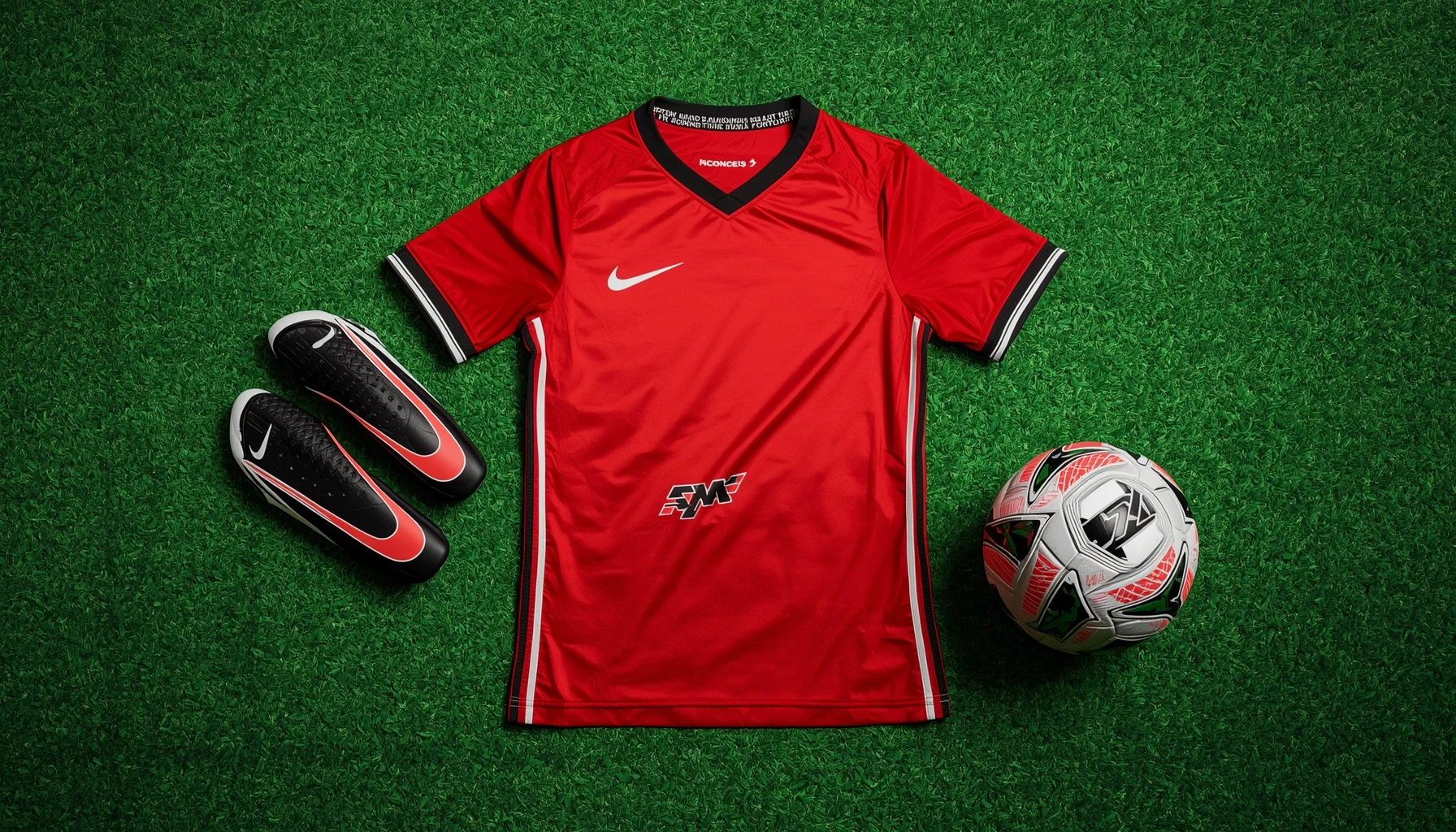 How to Outfit Small Teams with Custom Youth Soccer Jerseys - What Small-Team Custom Jerseys Need to Do
Build a consistent look without overcomplicating it
A team uniform is a working system, not simply a graphic on a shirt. Players, coaches, families, and officials need to identify the team quickly, while the design should remain consistent across the roster. Team colors, a name, and player numbers provide a practical foundation; adding too many decorative elements can make the result harder to read.
Before choosing a design, agree on a few decisions as a group:
- Which team colors should be most prominent?
- What team name or identifying text should appear?
- Does each jersey need an individual player name, number, or both?
- Will the design be used for one season, an event, or repeated orders?
These choices matter especially when a team has a small roster, late registrations, or players who need replacements. A no-minimum-order option allows the order to reflect the actual group rather than an arbitrary bulk quantity. That can also make it easier to handle a single additional jersey, although the team should confirm how any later order will match the original design and finish.
Understand the customization and production model
A custom uniform order connects several decisions: garment style, colors, personalization, finish, proof approval, production, and delivery. Legendkits describes an online design process with professional design assistance, followed by a free digital proof for approval before production begins.
For customization, the specified options include team names, player names, numbers, and team colors. For the visible design, the available finishes include stitched tackle twill and high-quality printing. These are different construction approaches, so the team should choose based on its intended look and use rather than assuming one is universally better.
The proof is an important quality checkpoint. It gives the team a chance to review how selected details appear together before manufacturing starts. Treat that review as a roster and design check—not just a quick glance at the colors. Confirm names, number assignments, spelling, and the overall layout.
Plan around the players who will wear the jerseys
A design can look polished on screen but still create avoidable problems if the team does not organize player information carefully. Assign one person—often a coach, team manager, or parent volunteer—to collect approved names, numbers, and relevant garment choices. Keep a single current roster document so updates do not become scattered across messages.
For youth teams, include families in decisions that affect individual jerseys, especially name and number spelling. Establish a clear deadline for submitting details, then ask a second person to check the final list. This basic process helps prevent errors when multiple players share similar names or when a number changes late.
Keep the design easy to reproduce, too. A clear reference to the approved colors, text, and finish gives the team a consistent starting point if it later needs another jersey. Legendkits’ no-minimum-order policy can support small-batch needs, but teams should still preserve their approved design and order information for future reference.
Specifications and Workflow: What to Confirm
The useful specifications for a small-team order are the decisions and checkpoints that affect personalization, finish, approval, and timing. Reviewing them together helps the team move from a broad design idea to a production-ready order.
Compare the available customization decisions
The table below organizes the confirmed options and workflow details. It is a planning aid, not a claim about garment measurements, fabric composition, or performance ratings; those details are not specified in the available product information and should be confirmed directly if they are important to the team.
| Decision or stage | Confirmed option or detail | Practical check for the team |
|---|---|---|
| Team identity | Team names and team colors can be customized | Check spelling and agree on the colors before design begins |
| Player identification | Player names and numbers can be included | Verify each entry against the current roster |
| Design support | Online design tools and professional design assistance are available | Decide whether the team will build the design itself or request help |
| Finishing method | Stitched tackle twill or high-quality printing | Select the preferred finish and confirm it on the proof |
| Design approval | A free digital design proof is provided before production | Review the proof and approve only after checking all details |
| Minimum order | No minimum order quantity is required | Order for the actual group rather than adding unnecessary units |
| Production time | Production is stated as 1 to 3 business days | Confirm when the production clock starts and whether approval is complete |
| Total delivery time | Total delivery is stated as 6 to 11 business days | Plan from the team’s needed-in-hand date and verify current timing |
| Shipping | Free standard shipping on orders within the United States | Confirm the delivery address and allow for the stated standard-shipping window |
Choose a finish based on the team’s priorities
The two stated finishing choices are stitched tackle twill and high-quality printing. The right choice depends on the team’s preferred appearance and the design being produced. Since no specific durability test results, fabric details, or care instructions are provided here, avoid treating either finish as a guaranteed solution for every use case.
Instead, ask targeted questions during design review. How will the lettering and numbers look at the intended viewing distance? Does the team prefer a stitched appearance or a printed one? Are there small design details that should be simplified so they remain clear? If the team has particular expectations for washing, wear, or garment construction, request the relevant product information before approving the order.
The digital proof is the best point to inspect how the chosen finish and layout work together. Check that names and numbers are legible, that the team colors appear as intended, and that the design feels consistent across the set. A proof confirms the design being approved; it does not substitute for asking about technical details that are not shown.
Interpret timing as a planning window
Legendkits lists production at 1 to 3 business days and total delivery at 6 to 11 business days. These are useful planning figures, but a team should not confuse production time with the full time from its first design discussion to receiving the order.
The process includes design decisions and approval, so internal delays can affect the schedule. A proof that waits several days for review can push the order later even if the stated manufacturing window remains unchanged. For that reason, set a response deadline for the person or group responsible for approving the proof.
Work backward from the date jerseys are needed. Leave time before the first match or event to receive and inspect the order, and confirm the current turnaround when placing it. If the schedule is particularly important, ask how the delivery estimate applies to the team’s specific order and destination rather than relying on a general window alone.
How to Order Jerseys: A Practical Workflow
A reliable order workflow moves from design choices to proof approval, then production and delivery. Assigning an owner to each step reduces avoidable roster errors and makes the stated turnaround easier to plan around.
Step 1: Collect the team’s requirements
Start with a roster and a short design brief. Record the team name, selected colors, player names, number assignments, quantity, and preferred finish. Identify any details that are still undecided instead of guessing; for example, mark a number as pending if a coach has not finalized it.
Then confirm who has authority to approve the design. A small team may involve a coach, a parent coordinator, and several families, but production should not rely on conflicting instructions from multiple people. Choose one contact to consolidate feedback and submit a single, checked set of details.
Before moving on, review the brief for common inconsistencies:
- Every player who needs a jersey appears once.
- Each name is spelled as approved by the player or family.
- Numbers are final and not assigned twice by mistake.
- The requested team colors and finish are recorded clearly.
- The required quantity matches the current team needs.
This preparation helps the design process focus on presentation rather than resolving missing information mid-order.
Step 2: Design, request assistance, and review the proof
Use the available design tools to select styles, colors, and finishes, or use professional design assistance if the team needs help translating its idea into a coherent uniform. The exact tool interface and available garment selections are not specified here, so confirm the options available for the particular order.
Once the design is prepared, review the free digital proof before production begins. Check the proof against the approved brief, not against memory. Verify every name and number, look for consistency in team colors, and confirm that the selected stitched or printed finish is represented correctly.
A useful review sequence is:
- Roster: Compare every personalized item with the current list.
- Layout: Check that names, numbers, and team identification are easy to distinguish.
- Consistency: Look for differences between jerseys that should match.
- Approval: Collect one consolidated set of corrections, then confirm the final proof.
Do not approve while essential details remain uncertain. If a revision is needed, communicate it clearly and review the updated proof before giving final approval.
Step 3: Approve, track timing, and inspect delivery
After the team approves the proof, the order enters production. Legendkits states a production time of 1 to 3 business days and total delivery time of 6 to 11 business days. Keep a record of the approval date and the expected delivery window, and confirm the current estimate when placing the order.
When the jerseys arrive, compare them with the approved proof and roster. Check quantities, names, numbers, and the general design before distributing the set. If something appears inconsistent, document the concern and contact the provider promptly with the order details.
For a team expecting roster changes, keep the final proof and order information. A future small-batch order is easier to coordinate when the team can refer to its approved design rather than recreate it from screenshots or old messages. Before ordering additional jerseys, confirm that the same design and finish can be used and check the current delivery estimate.
Design Tips, Common Pitfalls, and Small-Team Examples
The strongest small-team uniform process is simple: standardize what should match, verify what differs, and leave enough time for proof approval and delivery. Most preventable issues come from incomplete roster details or unclear decisions, not from a lack of design complexity.
Make the design readable and repeatable
A useful team design gives priority to identification. Keep team colors coherent, use names and numbers consistently, and review the layout at a size that approximates how the jersey will be seen in play. If decorative details compete with a player number or team name, simplify the design before approving it.
For small clubs and amateur teams, repeatability is also practical. A team may need a replacement jersey, a late addition, or a small set for a later event. Save the approved proof and document the chosen colors, personalization conventions, and finish. This creates a dependable reference even if a different volunteer coordinates the next order.
Avoid assuming that every visual idea will translate equally well across both finishing methods. If the design includes fine details or unusual lettering, ask how it will be represented and inspect the proof closely. If the team has a specific requirement for garment material, fit, or care, verify it separately; those technical specifications are not established by the customization options alone.
Prevent common ordering mistakes
The most frequent process risks are straightforward to address:
- Late roster changes: Set a cutoff date and label unconfirmed details before design begins.
- Spelling errors: Have each player or family verify their name, then assign a second reviewer.
- Conflicting feedback: Route comments through one coordinator who submits consolidated revisions.
- Assumed approval: Treat production as ready to proceed only after the team has reviewed and approved the proof.
- Schedule compression: Plan backward from the event date and account for design review as well as production and delivery.
- Unclear expectations: Ask about garment, sizing, care, and other product details that are not specified in the available information.
These controls are particularly useful when parents, coaches, and players all contribute to an order. A short checklist can prevent a long correction cycle.
Apply the process to real small-team situations
A youth team with a fixed roster can agree on colors and finish, collect names and numbers in one roster, then approve a single proof. With no minimum order quantity, the team does not need to increase its quantity simply to reach a stated minimum.
A club handling a late addition can first check whether the approved design can be reused, then confirm the available ordering and delivery timeline. A no-minimum policy is relevant to this situation, but the team should not assume that a later order will automatically arrive before a match.
A family or fan group preparing for an event can use the same basic workflow: choose a shared design, specify individual names or numbers where needed, review the proof, and schedule around the event date. The order process can support individual or group needs, but each participant’s details still require verification.
In each case, the practical advantage comes from matching the order to the actual group and reviewing the design before production—not from skipping coordination.
Scaling Orders and Planning Ahead
For clubs and organizations, small-batch ordering is easiest to manage when design decisions, roster records, and approvals are documented. In 2026, teams should treat reliable process control—not assumed market statistics—as the basis for planning and consistent reorders.
Keep an order system that can grow with the team
A small squad may eventually become a larger program with multiple age groups or recurring events. Establish simple standards early: an approved team name, a documented color direction, a clear method for assigning numbers, and a named person responsible for proof approval. These practices reduce confusion when orders involve several groups.
Maintain a basic record for each order:
- The approved digital proof.
- The final roster and quantity.
- The chosen finish.
- The approval date and delivery estimate.
- Notes on questions that were confirmed with the provider.
This record is not a substitute for current confirmation. Product availability, delivery timing, and other order details should be checked when placing each new order. But documentation helps the organization make those checks efficiently and avoid rebuilding its design from scratch.
The no-minimum-order model can suit organizations that need only a small number of jerseys at a time. It does not establish that every future order will have identical timing or appearance, so confirm the details for each order.
Use proofing as a governance checkpoint
As a team grows, informal group chats can create contradictory instructions. A consistent approval process protects both the organization and the players: one coordinator gathers input, one final roster is checked, and an authorized person approves the digital proof.
The approval record should make clear which version was accepted. If revisions occur, replace outdated drafts so no reviewer approves an obsolete layout. This is especially important when names, numbers, or colors change after the initial design.
Legendkits’ described workflow includes a free digital proof before production. From an operational perspective, that proof is a chance to validate the requested design, not an assurance of unlisted fabric properties or performance characteristics. Organizations with special requirements should ask specific questions before approving.
Plan with confirmed information, not invented benchmarks
A 2026 planning outlook should be grounded in the facts available: no minimum order quantity, a choice of stitched tackle twill or high-quality printing, a free digital proof, production stated at 1 to 3 business days, and total delivery stated at 6 to 11 business days. These figures support scheduling, but no broader industry percentage benchmarks are established here.
For a season or tournament, start early enough to accommodate design decisions, proof review, and delivery. Confirm the estimate with the provider at the time of ordering, especially when the date is fixed. As Legendkits’ team-apparel perspective emphasizes, a professional result depends on a clear brief, accurate roster data, and deliberate approval as much as on the visual design itself.
For current customization information and order guidance, teams can consult Legendkits. Verify any details not covered in this guide directly before committing to an order.
FAQ
Can a small youth soccer team order without meeting a minimum?
Yes. Legendkits states that there is no minimum order quantity, so a team can order for its actual needs rather than adding jerseys to meet a bulk threshold. This can be useful for a small roster, a club with limited quantities, or a family or fan group ordering for an event. Confirm the exact quantity and design details for the order, and check whether later additions can use the same approved design.
What customization can be included on the jerseys?
The stated customization options include team names, player names, numbers, and team colors. Teams can use online design tools to select styles, colors, and finishes, or request professional design assistance. The available finishes are stitched tackle twill and high-quality printing. Because specific garment measurements, fabric composition, and care instructions are not provided here, ask the provider directly if those details are important to your decision.
How long should a team allow for production and delivery?
Legendkits states that production takes 1 to 3 business days and total delivery takes 6 to 11 business days. These are planning windows, not a reason to leave ordering until the last minute. The team also needs time to collect roster information, review the digital proof, and approve it. Work backward from the event date and confirm the current estimate when placing the order.
What should the team check before approving the digital proof?
Compare the proof with the final roster and design brief. Check every name’s spelling, every number assignment, the team colors, the layout, and the selected finish. Make sure the proof being reviewed is the latest version and consolidate feedback through one coordinator. Approval should happen only when the team is satisfied with the represented design; ask separately about technical product details that the proof does not show.