

Custom soccer kits for local leagues in 2026 can give a whole team a coordinated, professional look without requiring a mass-market order. The key is to settle the design, names, numbers, colors, and finish before production, using MLS-inspired soccer kit design ideas for 2026 for visual direction. This guide explains the choices and workflow, including how Legendkits’ free digital proof and small-batch fulfillment can support organizing a team jersey order for team-wide procurement.
What Custom Soccer Kits Include
A custom soccer kit is a coordinated set of personalized jerseys designed around a team’s colors, identity, and player details. For local leagues, the practical challenge is making the order work for a whole roster—including replacements or individual orders—while keeping names, numbers, and design elements consistent; teams can also consider whether custom printed jerseys are worth it for recreational leagues before choosing a finish.
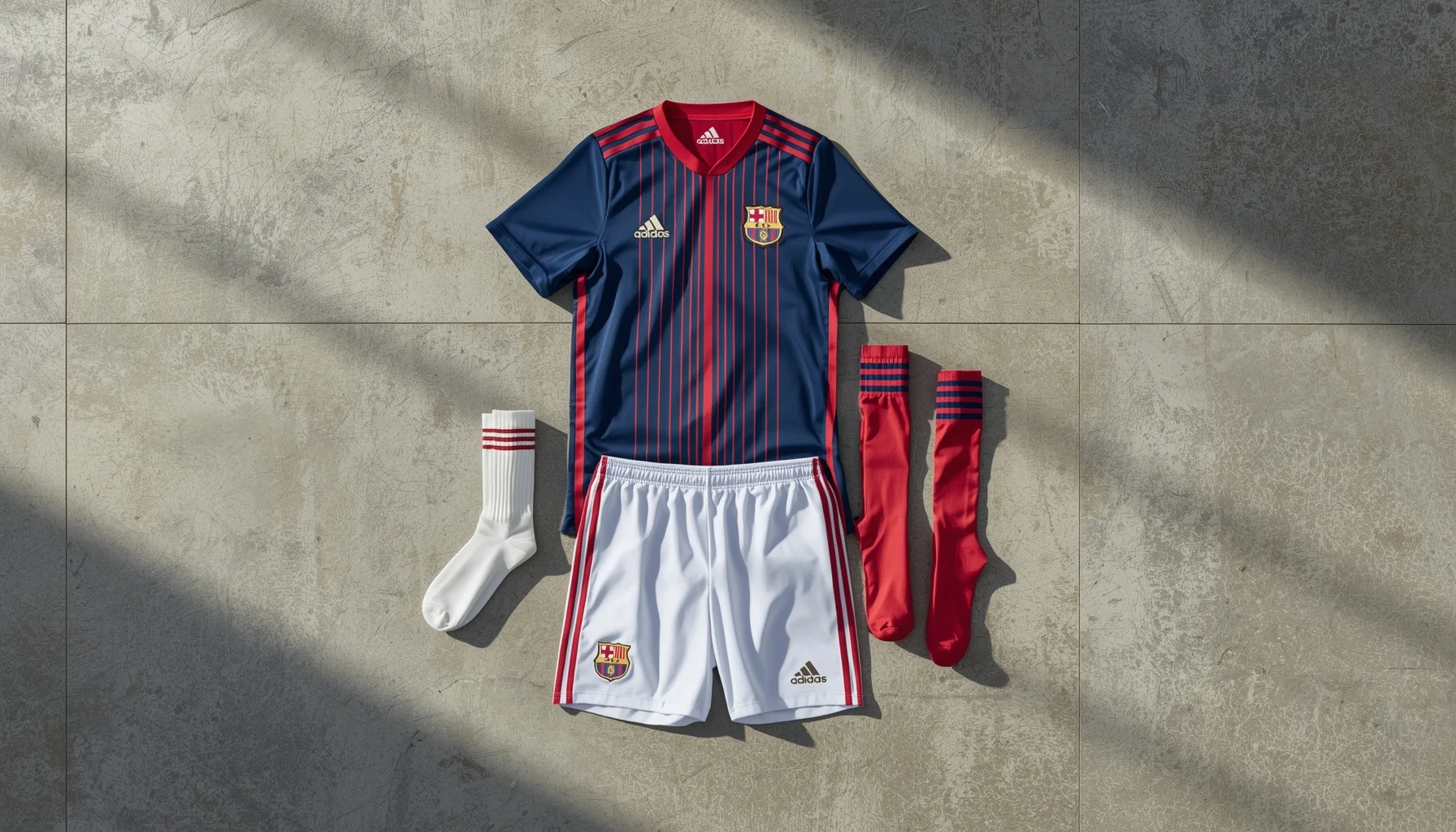 Custom Soccer Kits for Local Leagues 2026: Team Guide - What Custom Soccer Kits Include
From individual jerseys to a team-wide kit
A league kit is more than a jersey design. It is a repeatable visual system: a shared color palette, consistent placement of team branding, and a numbering and naming approach that remains legible across the roster.
Before selecting a style, teams should agree on the details that affect every player:
- Base and accent colors that distinguish the team and remain easy to recognize.
- Numbering conventions, including number size and placement.
- Name treatment, if player names are included.
- Finishing method: printed customization or stitched tackle twill.
- A process for roster changes, late additions, and replacement jerseys.
This planning matters especially for community clubs, youth teams, and amateur leagues, where order quantities can vary and players may join at different times. A supplier with no minimum order requirement can accommodate individual or small-batch needs, rather than forcing the team to buy a large surplus.
Why the 2026 event influences local designs
The 2026 World Cup gives local teams a prominent reference point for kit design, but professional tournament styles should be adapted rather than copied wholesale. The useful lesson is to identify a visual direction—such as a retro-inspired collar or a dynamic stripe—and apply it in a way that fits the team’s identity and practical requirements.
The supplied industry context reports that Adidas, Nike, and Puma supply 37 of the 48 competing nations, or 77.1%. That concentration illustrates the visibility of major supplier identities; it does not mean local teams need a major-brand contract to create a coherent kit. A clear design brief and careful proof review are more actionable.
The Legendkits service model
Legendkits provides customized jerseys for youth teams, amateur leagues, clubs, families, and fan groups. Teams can personalize names, numbers, and colors, with a choice of high-quality printing or stitched tackle twill.
The workflow includes professional design assistance and a free digital design proof for every order. Production takes 1 to 3 business days after the design is approved; total delivery is 6 to 11 business days, and standard shipping is free within the United States. These details can help a team plan its order timeline, but the team still needs to allow time to confirm the roster and approve the proof.
Design Specifications and Choices for a Local League
A reliable kit specification records what the team has chosen and what the supplier must reproduce. The matrix below organizes those decisions around the customization options and process details available through Legendkits.
 Custom Soccer Kits for Local Leagues 2026: Team Guide - Design Specifications and Choices for a Local League
Build a usable specification before ordering
Treat the kit brief as a shared reference, not an informal collection of messages. It should identify the team’s preferred style, colors, names, numbers, branding, and finish. If more than one person is involved in approvals, designate who can confirm the final proof.
| Specification area | Available or relevant choice | Team action before approval |
|---|---|---|
| Jersey style | Select a preferred jersey style | Confirm the same design direction for the roster |
| Team colors | Custom team colors | Record the intended base and accent colors clearly |
| Player names | Custom names can be included | Check spelling, capitalization, and roster changes |
| Player numbers | Custom numbers can be included | Check each number against the current roster |
| Finish | High-quality printing or stitched tackle twill | Select the finish that matches the intended look |
| Design support | Professional design assistance is available | Provide the team identity and customization details |
| Proofing | Free digital design proof before production | Review all visible details and request corrections |
| Production | 1 to 3 business days | Begin only after the proof is approved |
| Delivery | 6 to 11 business days total | Schedule the order with the full delivery window in mind |
| Shipping | Free standard shipping in the United States | Confirm the delivery location and order timing |
The table distinguishes selectable design details from process facts. It does not imply that every fabric, garment specification, or performance feature is available; those details should be confirmed with the supplier if they are important to the team.
Choose a finish based on the design
Printing and stitched tackle twill are different finishing approaches, not interchangeable labels for overall jersey quality. Printing may suit designs with multiple visual elements, while stitched tackle twill offers a distinct sewn-on appearance for names or numbers. The right choice depends on the intended look and the details confirmed for the order.
Teams comparing finishes can review this guide to stitched versus printed jerseys for sports. Avoid assuming that one option is automatically best for every use. Instead, compare the design’s visual complexity, the team’s preferred appearance, and the proof that will be produced before manufacturing.
Translate 2026 trends into practical choices
The supplied 2026 trend context points to retro-1990s influence, structured collars, thicker chest panels, heavier striping, and modern athletic proportions. It also describes off-white bases, deeper blues, warmer reds, and restrained neon accents. These are design directions, not mandatory specifications for every kit.
For local teams, restraint can improve consistency. A single accent color may be easier to coordinate across numbers and trim than a full-neon concept. Wavy lines, flowing chevrons, and offset elements can suggest movement without crowding the jersey. A cleaner silhouette may also support crossover wear beyond match day. Keep the design brief specific enough to guide the proof, but avoid adding visual effects that compete with names and numbers.
How to Order Custom Soccer Kits Step by Step
A successful kit order follows a simple sequence: define the design, submit player details, review the proof, approve production, and plan for delivery. Accuracy at the roster and proof stages is especially important because production begins after approval.
Step 1: Align the team before submitting details
Start with one team representative responsible for collecting decisions and checking the final order. Ask the team to agree on the style, colors, branding, and preferred finish before individual player information is assembled.
Create a roster sheet that includes each player’s name and number exactly as it should appear. Confirm spelling directly with each player or guardian where appropriate. If a number is undecided, resolve it before approval rather than relying on a last-minute message.
This preparation reduces conflicting instructions and makes it easier to compare the final proof against a single source of truth. For a club with multiple teams, keep each roster and design brief separate, even if the colors or visual identity are shared.
Step 2: Submit the design and customization requirements
Choose the jersey style and color palette, then provide the team branding and player details. Teams can use the available design tools or seek professional design assistance. Explain the desired placement and visual direction as clearly as possible, especially if the concept includes stripes, a collar, or offset graphics.
The design submission should distinguish fixed elements from flexible ones. For example, the base colors and team identity may be fixed, while an accent detail can be adjusted to improve the overall layout. State the chosen finish—printed customization or stitched tackle twill—so the design can be prepared accordingly.
If the team is ordering for a particular event, establish its date early. Production and delivery are separate stages, so the 1-to-3-business-day production window should not be treated as the complete delivery timeline.
Step 3: Review the free proof carefully
Legendkits provides a free digital design proof before production. Use it as a verification checkpoint, not just a preview of the general concept. Compare the proof with the approved roster and original design brief.
Check:
- Names: spelling, capitalization, and correct player assignment.
- Numbers: digits, placement, and consistency with the roster.
- Colors and layout: alignment with the team-approved palette and design.
- Finish: whether the proof reflects the intended printing or stitched tackle twill choice.
- Whole-team consistency: whether the design remains coherent across player versions.
One designated approver should send consolidated corrections. That prevents different team members from requesting conflicting changes at the same time.
Step 4: Approve, then plan fulfillment
Once the proof is accurate and the team approves it, the order enters production. Legendkits lists production at 1 to 3 business days and total delivery at 6 to 11 business days. The stated delivery period includes more than manufacturing, so teams should plan around the total window rather than counting only production days.
For a league kickoff, allow a buffer for gathering roster information, reviewing the proof, and addressing any requested corrections. Avoid promising players a precise arrival date until the order schedule and delivery details have been confirmed.
Quality Control, Pitfalls, and Team Examples
Most avoidable order problems stem from unclear ownership, incomplete player details, or approving a proof too quickly. A repeatable review process helps teams preserve design consistency while handling small-batch orders and roster changes.
Common pitfalls and practical fixes
Pitfall: collecting names and numbers informally. Messages across multiple channels make it easy to miss a correction. Use one roster document and appoint one person to submit the final information.
Pitfall: treating a trend image as a complete design brief. A reference can communicate mood but may not specify colors, placement, or customization. Translate inspiration into explicit instructions and review the digital proof against them.
Pitfall: approving based on the overall appearance alone. A design can look right while containing a misspelled name or incorrect number. Check every personalized detail individually.
Pitfall: ordering too close to the first match. Production is listed as 1 to 3 business days, while total delivery is 6 to 11 business days. Build in time for team decisions and proof review; do not plan only around manufacturing.
Example: a youth roster with a late addition
A youth team can establish its base design and collect the initial roster before submitting the order. If a player joins later, the team can check whether an individual or small-batch order fits its needs, since Legendkits has no minimum order requirement. To preserve consistency, the team should reuse the original approved design direction and verify the new player’s details on a proof before production.
This example illustrates why a saved brief matters. It gives the team a reference for colors, finish, and design choices, although the availability and timing of any later order should be confirmed rather than assumed to match the first order automatically.
Example: an amateur club adapting tournament inspiration
An amateur club inspired by 2026 tournament kits might choose a deeper blue base, a warmer red accent, and a flowing stripe rather than reproducing a professional team’s kit. It can pair that direction with a clean layout for names and numbers, then assess whether printing or stitched tackle twill better matches the intended appearance.
The objective is not to imitate a supplier or national team. It is to translate a broad visual trend into a recognizable, practical club identity. For organizers assessing the service process in more detail, this Legend Kits review of quality and turnaround offers related context.
Planning for Clubs and the 2026 Outlook
For clubs and league organizers, the strongest procurement plan connects design governance with roster accuracy and realistic scheduling. In 2026, teams can draw on prominent kit trends while keeping their own identity, order size, and approval process at the center.
Organize procurement across multiple teams
A club ordering for several squads should create a consistent approval structure without assuming every team needs the same design. Centralize shared brand decisions—such as core colors and logo treatment—while maintaining separate roster records and proof approvals for each squad.
A practical club checklist includes:
- Name one decision-maker for each team and one overall design contact.
- Keep each roster tied to the correct team and approved design.
- Record the selected finish and color direction in the team brief.
- Review each proof before production rather than relying on a previous team’s approval.
- Coordinate ordering early enough to accommodate the full stated delivery window.
Small-batch and individual fulfillment can help clubs avoid making every order dependent on one large bulk purchase. However, separate orders may require separate coordination, so establish how new-player requests and replacements will be handled.
Apply trend awareness without losing identity
The 2026 trend picture includes retro references, off-white bases, deeper blues, warmer reds, limited neon accents, matte finishes, and motion-oriented graphics. These are useful prompts for design discussions, not guarantees about a particular product’s materials or construction.
The supplied market context also projects the global football team kit market at $8.38 billion in 2026. That figure indicates a large and competitive market, but it should not be treated as a measure of local-league demand or a reason to follow every trend. A better test is whether a design is recognizable, legible, and consistent with the club’s identity.
Legendkits’ role in that process is practical: supporting custom names, numbers, team colors, design assistance, proofing, and small-batch fulfillment. For local organizers, a well-managed design brief and approved proof remain more useful than chasing a trend without checking how it works for the full team.
FAQ
Can a local team order custom soccer kits without a minimum quantity?
Legendkits’ service model has no minimum order requirement, which can support a small team, individual player, or group that cannot place a large bulk order. Teams should still collect requirements and confirm the order details before submitting them. If a roster changes later, ask the supplier about the appropriate process for an additional order rather than assuming it will automatically match the original order’s timing.
How long does production and delivery take?
Legendkits lists production at 1 to 3 business days and total delivery at 6 to 11 business days. These are different measures: production describes manufacturing, while total delivery accounts for the broader fulfillment period. Teams should schedule around the stated total delivery window and leave time for collecting player information, reviewing the free digital proof, and approving any corrections before production begins.
What should a team check on its digital design proof?
Compare the proof with the final team brief and roster. Verify every player’s name and number, the intended team colors, the overall layout, and the selected finish—printing or stitched tackle twill. Also check that the design is consistent across player versions. One person should gather corrections and confirm approval so the supplier receives a clear, consolidated response rather than conflicting requests from several players.
Should a team choose printing or stitched tackle twill?
The choice depends on the team’s preferred appearance and design requirements. Legendkits offers high-quality printing and stitched tackle twill, but neither finish should be assumed to suit every design equally. Compare how each option supports the intended look, then confirm the details through the design process and proof. Teams that need a closer comparison can consult a dedicated guide to choosing between stitched and printed sports jerseys.